Vietnam Visa for Senegalese Citizens
Table of Contents
- Vietnam E-Visa Requirements for Senegalese Citizens
- Denied Boarding at Dakar (DSS): What Happens When Your Visa Isn't Ready
- The Senegalese Passport Trap: Name Formatting Errors That Kill Applications
- Skip the Queue: VIP Fast-Track at Vietnam's Airports
- How to Apply for Your Vietnam E-Visa in 2026
- Frequently Asked Questions
Reviewed by: Stanley Ho | Last Updated: May 2026
The Vietnam visa for Senegalese citizens in 2026 is simpler than you've probably been told — but it's also full of small traps that catch West African travelers off guard more than almost any other nationality I work with. I've been sorting out these exact headaches for over two decades, and I still see the same mistakes surfacing every travel season. So let me save you the grief.
Vietnam is having a moment. The numbers don't lie — tourism to Hội An, Hạ Long Bay, and the street food corridors of Hanoi is surging, and Senegalese travelers are increasingly part of that wave. Whether you're a businessperson shuttling between Dakar and Ho Chi Minh City for trade meetings, a student on a cultural exchange, or simply someone who saw a video of bánh xèo sizzling in a street-side pan and booked a flight — you need to understand exactly what the visa situation looks like right now, in 2026. Not last year. Not three years ago. Now.
Here's the most important thing to get straight immediately: the old visa on arrival approval letter system is completely and permanently dead. Any website still selling you those letters is taking your money for a document that will get you denied at check-in. Vietnam's Immigration Department discontinued that pathway years ago and has shown zero interest in resurrecting it. In 2026, the 90-day Vietnam E-visa is the only legal route for Senegalese passport holders — applied for entirely online, before you fly.
Vietnam E-Visa Requirements for Senegalese Citizens
The e-visa available to Senegalese travelers grants a maximum 90-day stay, your choice of single or multiple entry. Multiple entry is particularly worth considering if your itinerary includes side trips into Cambodia or Laos — crossing a land border and re-entering Vietnam is perfectly straightforward with the right visa type, and the price difference is modest.
Before you open the application portal, gather these documents:
- Senegalese passport valid for at least 6 months beyond your planned arrival date in Vietnam
- Minimum 2 blank visa pages remaining in your passport
- Recent passport photo — taken within 6 months, facing forward, no glasses, plain white or light-colored background, full face clearly visible
- A clear scan of your passport data page — every character must be legible, no glare, no shadows, no cropped edges
- Your travel plans — intended entry date, departure date, and accommodation confirmation
- Valid email address — your approval arrives here
- Payment method — international credit or debit card; fees start from USD $25 depending on visa type
Standard processing for the Vietnam visa for Senegalese citizens runs 3 business days. If your plans change suddenly or you simply left things late, an urgent processing option exists that can deliver clearance within 2 to 4 hours. Both options are available through the official government portal at evisa.gov.vn, or through a professional visa service that will handle the submission and accuracy checks on your behalf — which, given the name formatting issues I'll get to shortly, is often worth every cent.
Once your e-visa is approved, you'll receive it by email as a PDF. Print it or keep it on your phone — Vietnam's immigration officers and airline check-in staff both accept digital copies without question.
Denied Boarding at Dakar (DSS): What Happens When Your Visa Isn't Ready
Let me paint you a scene that my team gets emergency calls about every single month.
It's 4 AM at Blaise Diagne International Airport in Dakar (DSS). You've dragged yourself and your bags out to the airport in the dark, found a trolley, queued at the Air France or Royal Air Maroc check-in desk for your connecting flight toward Vietnam. The agent takes your passport, types something, frowns at the screen, and asks quietly if you have a valid Vietnam visa. You pull up your phone and show the email you received — but the passport number on the e-visa approval doesn't exactly match the one printed in your Senegalese passport. Or the name fields are transposed. Or the application was for the wrong entry date.
Boarding denied.
You now have roughly three hours to fix a problem that normally takes three days to process through official channels — and the Vietnamese embassy nearest to Dakar is in Paris.
This is not hypothetical. It happens. The causes are almost always minor data entry errors made during the online application — a single digit transposed in a passport number, a name field entered the way you write your name socially rather than exactly as it appears on the data page of your passport, or an urgent application that was submitted but never confirmed because the confirmation email went to a spam folder.
If you find yourself in this situation, call our emergency line immediately. Our Super Urgent Visa Service operates specifically for travelers in crisis — we can push a new, corrected e-visa through Vietnam's immigration priority channels within 2 to 4 hours, coordinated to land before your next boarding attempt.
💡 Expert Insight from Stanley Ho: "Over my 23+ years handling travel logistics and Vietnam visa services, the most frequent disruption occurs at the check-in desk due to simple application formatting errors. If you are stuck at the airport and denied boarding, don't panic—our emergency team can secure a new E-visa clearance through priority channels within hours, saving your flight."
The Senegalese Passport Trap: Name Formatting Errors That Kill Applications
This section is the one I wish every Senegalese traveler read before touching the application form. Because the naming conventions that are completely natural and correct on a Senegalese passport are — unfortunately — exactly the type of data that the Vietnam e-visa portal tends to choke on.
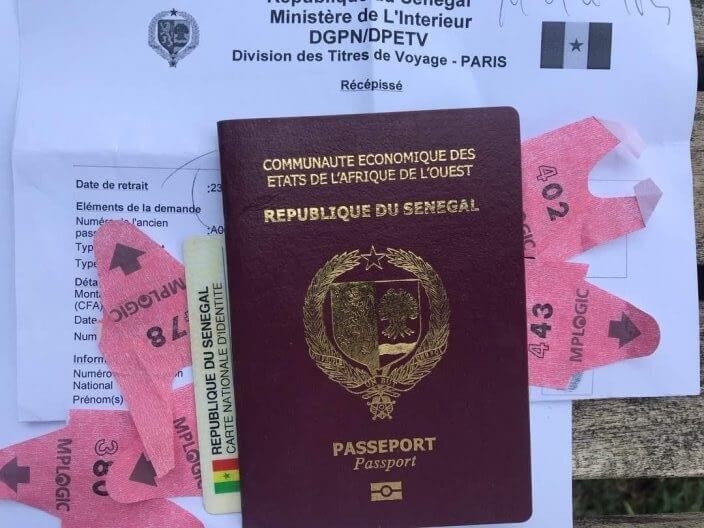
The French accent problem. Senegalese passports are issued in French and English, but the official name fields in French administrative documents routinely include accented characters: é, è, ê, ç, ï, ü, and the diaeresis on the ï in names like Aïssatou or Fatoumata. The Vietnam e-visa portal accepts only standard unaccented Latin characters. The portal will either reject these characters outright or silently strip them, producing a name on your e-visa that doesn't match your passport. The fix: replace every accented character with its plain Latin equivalent before submitting. Aïssatou becomes Aissatou. Ndèye becomes Ndeye. Ibrahïm becomes Ibrahim. Then verify this matches what appears in the machine-readable zone at the bottom of your passport data page — because that's what border scanners actually read.
Wolof and Pulaar name field ordering. Senegalese naming traditions — particularly among Wolof and Pulaar communities — don't map neatly onto a Western given-name / family-name binary. Many Senegalese citizens use a patronymic structure where the father's first name functions as the de facto family name, and in different official contexts the same person's name may appear in different orders. The e-visa portal requires a clear split into two fields. Always match the exact order shown on your passport data page: surname first, given names second. Do not rearrange for personal preference.
Long compound given names. It's common in Senegalese passports to see multiple given names strung together — Mamadou Ibrahima Cheikh as a single given name field, for instance. Enter all of them into the given name field exactly as they appear in the passport, separated by spaces, and do not abbreviate.
Arabic-origin names in French transcription. Because so many Senegalese names derive from Arabic (reflecting Senegal's 97% Muslim population), the same underlying Arabic name can be romanized differently depending on which French administrative office issued the document — Moussa vs Mussa, Oumar vs Omar, Ahmadou vs Ahmadu. Your e-visa must match your passport spelling exactly, not the Arabic original, not the English equivalent. Trust your passport, not intuition.
The practical rule: Before you fill in any name field on the e-visa form, open your passport to the data page, look at the two lines of machine-readable text at the bottom, and copy your names from there. That's the data source Vietnam's border systems will verify against.
Skip the Queue: VIP Fast-Track at Vietnam's Airports
After a Dakar–Paris or Dakar–Doha–Hanoi journey that's eaten the better part of a full day, the last thing any traveler wants is to join a 200-person immigration queue in a hot arrivals hall. Vietnam's airports are busy, and the standard arrival lanes at peak hours can stretch your wait significantly.
The VIP Airport Fast-Track service cuts all of that out entirely. A personal concierge from our ground team meets you at the aircraft gate — before you ever reach the immigration hall — and escorts you through the diplomatic priority channel. No queue, minimal wait, and someone who speaks English and Vietnamese handling any paperwork friction on your behalf.
This service is available at Vietnam's major international entry points: Tan Son Nhat International Airport (SGN) in Ho Chi Minh City, Noi Bai International Airport (HAN) in Hanoi, and Da Nang International Airport (DAD) for central Vietnam. If your itinerary takes you straight to the beach, Cam Ranh International Airport (CXR) serving Nha Trang and Phu Quoc International Airport (PQC) offer the same fast-track assistance.
For business travelers on tight turnaround schedules, it's a no-brainer. For leisure travelers arriving jetlagged after a transcontinental journey from Senegal, it's the kind of upgrade that sets the right tone for the entire trip.
How to Apply for Your Vietnam E-Visa in 2026
The application is completed 100% online. Here's exactly how it works:
- Go to the official portal. The Vietnamese government's e-visa portal is at evisa.gov.vn. Alternatively, use a professional service like VisaOnlineVietnam — our team reviews your application before submission to catch formatting errors before they become boarding denials.
- Enter your personal details carefully. This is the step where most errors occur. Open your passport to the data page and copy your name from the machine-readable zone at the bottom, stripping any accented characters. Enter your passport number exactly — no spaces, no dashes. Double-check your date of birth format (DD/MM/YYYY).
- Upload your documents. A recent passport photo meeting the specifications above, plus a clear, high-resolution scan of your passport data page. No blurring, no partial pages. Use your phone's highest camera resolution and photograph in natural daylight on a flat surface.
- Select your visa type. 90-day single entry or 90-day multiple entry. If there's any chance your trip includes border crossings into Laos or Cambodia, choose multiple entry. The price difference is small; the flexibility is significant.
- Pay and submit. Government fees start from USD $25. Major international credit and debit cards are accepted.
- Receive your approval. Standard processing: 3 business days. Urgent processing: 2 to 4 hours. Check your inbox and your spam folder. Download the PDF approval immediately upon receipt.
- Travel with your e-visa. Print a copy or keep the PDF accessible on your phone — Vietnam accepts both at airline check-in desks and at immigration arrival counters.
Frequently Asked Questions
Can Senegalese citizens get a visa on arrival in Vietnam in 2026?
No — and I want to be very direct about this because I still see misinformation circulating. The visa on arrival approval letter system was discontinued by Vietnam's immigration authorities and does not exist in any form in 2026. Any agent or website offering to sell you a VOA letter is either badly out of date or running a scam. The 90-day e-visa, applied for online before travel, is the correct and only standard pathway for Senegalese passport holders.
How long can Senegalese citizens stay in Vietnam on an e-visa?
The Vietnam e-visa for Senegalese citizens grants a maximum stay of 90 days from your designated entry date. It is not extendable once you are inside Vietnam. If you need more time, the standard strategy is to exit to a neighboring country — Cambodia and Laos are both straightforward short trips — and re-enter Vietnam on a fresh e-visa application. Multiple-entry visa holders can do this without any additional processing at the border.
Is there a Vietnamese embassy in Senegal I can visit for my visa?
As of 2026, Vietnam does not maintain an embassy or consulate in Senegal. Senegalese citizens who require an in-person Vietnamese visa service would need to contact the Vietnamese Embassy in Paris, which covers France and several West African countries. However, for the 90-day e-visa used by the vast majority of tourists and business travelers, no embassy visit is required at all — the entire process runs online from Dakar, from your phone or laptop.
My Senegalese passport has accented characters in my name — will that cause a problem?
Yes, it can, and this is one of the most common rejection triggers for Senegalese applicants. The Vietnam e-visa portal does not accept accented French characters like é, è, ç, or ï. You need to enter your name using only plain Latin characters — Aissatou not Aïssatou, Cheikh not Chëikh — and the result must match the machine-readable zone at the bottom of your passport data page, which also uses unaccented characters. Always verify against that line before submitting.
Can I enter Vietnam through multiple airports with the e-visa?
Yes. The Vietnam e-visa is accepted at 13 international airports including Tan Son Nhat (SGN) in Ho Chi Minh City, Noi Bai (HAN) in Hanoi, Da Nang (DAD), Cam Ranh (CXR) for Nha Trang, and Phu Quoc (PQC), as well as 16 land border crossings and 13 seaports. Whatever your entry point, the e-visa covers it — as long as the entry point you arrive at is designated as an international checkpoint, you're fine.

STANLEY HO
Over the past 23 years in the travel service industry, the growth and success of TRANSOCEAN have stemmed not only from the dedication of our well-trained, enthusiastic, and customer-oriented staff, but also from the exceptional leadership of our Founder and CEO, Mr. STANLEY HO. With more than 20 years of experience in the travel and tourism sector, Mr. STANLEY HO possesses profound knowledge of the market, customer behavior, and modern travel trends. His strategic vision has guided the company toward sustainable growth while maintaining a strong commitment to service quality.