Vietnam Visa for Northern Mariana Islands Citizens
Table of Contents
- Vietnam E-Visa Requirements for Northern Mariana Islands Citizens
- Denied Boarding at SPN: What Happens When Your Visa Isn't Ready
- The US Passport Trap: Name Formatting Errors That Kill CNMI Applications
- Skip the Queue: VIP Fast-Track at Vietnam's Airports
- How to Apply for Your Vietnam E-Visa in 2026
- Frequently Asked Questions
If you're looking into the Vietnam visa for Northern Mariana Islands citizens in 2026, you already have a geographic advantage that most travelers from the Western hemisphere would kill for. Saipan sits in the Western Pacific — Vietnam is practically in your backyard by global travel standards, a few hours by air compared to the 20-hour odysseys that Europeans and Americans on the mainland endure. And yet, every week, CNMI residents get tripped up by a visa application detail that has nothing to do with distance and everything to do with how they fill out a form. This guide exists to make sure that doesn't happen to you.
Vietnam in 2026 is drawing Pacific travelers in ways it hasn't before. The country's food culture alone — bánh mì in the back alleys of Hội An, phở pulled from a pot that's been simmering since 3am in Hà Nội, the whole grilled seafood scene along the central coast — is worth a trip on its own. Add the beaches of Phú Quốc, the mountain cool of Đà Lạt, the architectural layers of Hồ Chí Minh City, and you have a destination that rewards return visits. CNMI residents — US citizens and nationals holding US passports — are eligible for the Vietnam E-visa, and the process, done right, is genuinely simple. Done wrong, it turns a dream trip into an airport nightmare.
Vietnam E-Visa Requirements for Northern Mariana Islands Citizens
The Vietnam visa for Northern Mariana Islands citizens in 2026 means one thing: the official Vietnam E-visa. A government-issued electronic travel authorization, valid for 90 days, available in single-entry or multiple-entry format. The old Visa on Arrival (VOA) approval letter system — where third-party agents issued pre-approval letters you'd carry to the airport — is completely dead. Obsolete. Buried. Any website still hawking VOA letters in 2026 is selling you a service that Vietnam's immigration authority stopped recognizing years ago. Do not touch it.
As a CNMI resident travelling on a US passport, here is what your E-visa application requires:
- Valid US passport — minimum 6 months validity beyond your intended travel dates, with at least one blank page for the entry stamp
- Digital passport photo — clear, recent, white background, full face centered, no glasses or headwear (unless religious)
- Scanned passport bio-data page — high resolution, all four corners visible, no glare, no shadows over the text fields
- Travel itinerary — approximate entry and exit dates for Vietnam
- Valid email address — your approved E-visa arrives as a PDF by email
- International payment card — Visa, Mastercard, or equivalent; the fee is charged in USD
Standard processing takes 3 business days. An urgent option delivers clearance in 2 to 4 hours for travelers under time pressure. Once your E-visa PDF lands in your inbox, print it or save it to your phone — Vietnam accepts both physical and digital copies at the immigration counter on arrival. No embassy visit, no prior stamping, no additional authentication needed.
Denied Boarding at SPN: What Happens When Your Visa Isn't Ready
Francisco C. Ada / Saipan International Airport (SPN) — the CNMI's sole international gateway — handles a small but steady stream of Pacific-routed departures. Flights to Guam (GUM), then connections onward to Hồ Chí Minh City or Hà Nội via Manila, Tokyo, Seoul, or Hong Kong. It's not a direct flight. It's a journey. And that means multiple check-in points, multiple opportunities for a problem to surface — and the first of those is right there at the SPN check-in counter before you've even left the island.
Picture the scene. You've arranged your leave, your family knows you're going, your accommodation in Đà Nẵng is booked and paid. You arrive at Saipan International, drop your bags, and the check-in agent runs the verification check. The system flags it. Your Vietnam E-visa application is still pending — or worse, rejected for a formatting discrepancy you never noticed. Your flight to Guam departs in two hours. Your connecting flight won't wait.
What changes everything in that moment is knowing that Super Urgent Visa Service exists. Our emergency team operates around the clock, specifically for travelers in exactly this situation. Through priority processing channels with Vietnam's immigration authority, we can secure fresh E-visa clearance within 2 to 4 hours — enough time to make the Guam connection and keep the whole trip intact.
💡 Expert Insight from Stanley Ho: "Over my 23+ years handling travel logistics and Vietnam visa services, the most frequent disruption occurs at the check-in desk due to simple application formatting errors. If you are stuck at the airport and denied boarding, don't panic—our emergency team can secure a new E-visa clearance through priority channels within hours, saving your flight."
Apply at least 5 to 7 days before departure. And apply correctly the first time — because for CNMI travelers on US passports, "correctly" involves a specific set of traps that catch people who don't know to look for them.
The US Passport Trap: Name Formatting Errors That Kill CNMI Applications
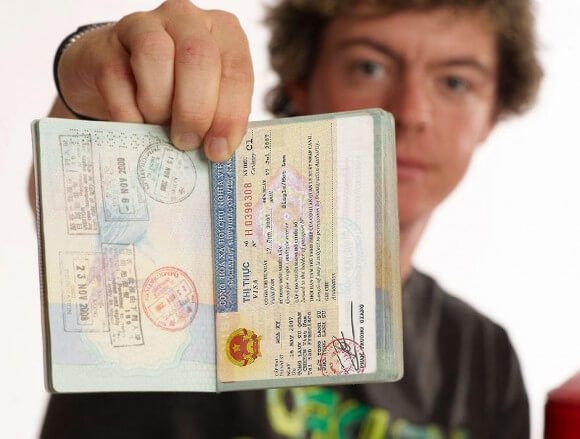
Here's the thing about US passports and the Vietnam E-visa portal: they don't always speak the same language, even though everything is technically in English. The problem is subtle. It's about what the machine-readable zone of your US passport actually shows versus how you've written your name your entire life.
The middle name problem. US passports include middle names in the visual data page. The machine-readable zone — the two lines of capital letters at the bottom of your passport's photo page — sometimes abbreviates or omits the middle name entirely, particularly in older-format passports or when the full name exceeds character limits. The Vietnam E-visa portal expects your name exactly as printed in the machine-readable zone. Type your name from the bottom lines of your passport, not from the top fields. If the MRZ shows JOHN T SMITH with a truncated middle, that's what you enter.
The Chamorro surname situation. The CNMI's indigenous Chamorro community carries surnames that are among the most distinctive in the Pacific — Camacho, Sablan, Taitano, Guerrero, Manibusan, Deleon Guerrero, Mendiola, Reyes. Many of these are compound or multi-word surnames, and here's where the portal creates friction. If your legal surname is DELEON GUERRERO — two words, no hyphen — and the MRZ renders it as DELEON GUERRERO across the surname field, that's how it goes in. Some applicants instinctively hyphenate it, or compress it into one word. Neither matches the passport. The resulting mismatch between E-visa and passport can trigger scrutiny at the Vietnam immigration counter that nobody wants after a 12-hour journey.
The Carolinian name dimension. The Carolinian community — another of the CNMI's indigenous peoples, with roots in the Caroline Islands — carries names that reflect their own distinct linguistic heritage. Names like Sikau, Orakul, Falewaath, and Refaluwasch appear in CNMI passports, sometimes with phonetic simplifications in the machine-readable zone relative to how they appear in the visual data. Same rule applies: the MRZ is your source of truth, not the visual section, not how the name is spelled in community records.
The nationality selection trap. CNMI residents are US citizens or US nationals and travel on US passports. When the Vietnam E-visa portal asks for nationality, select United States. Do not search for "Northern Mariana Islands" or "CNMI" — neither exists as a passport-issuing entity in the portal's nationality dropdown. The passport says UNITED STATES OF AMERICA on the cover; the portal entry matches that.
Large Filipino and Asian community note. The CNMI has a substantial Filipino, Chinese, and Korean population alongside its indigenous and other communities. Filipino travelers on US passports sometimes have names that follow Filipino naming conventions — compound first names (Maria Fe, Jose Luis), maternal surnames in formal records, or Spanish-heritage double surnames. The principle is identical: machine-readable zone, character by character, nothing added or changed.
Skip the Queue: VIP Fast-Track at Vietnam's Airports
You've made it. The Saipan-to-Guam hop, the long connection, the overnight or near-overnight flight, the final descent into Tân Sơn Nhất (SGN) or Nội Bài (HAN). You're somewhere between wired and exhausted. And then you see the immigration queue — a slow, dense, shuffling line of passengers from a dozen international arrivals processed through the same counters.
There's a better option. Our VIP Airport Fast-Track Service puts a personal concierge at the gate to meet you, escorts you through a dedicated priority immigration channel, and handles the formalities directly with the officer. You walk past the standard queue entirely. For CNMI travelers who've already invested eight to fourteen hours in transit to reach Vietnam, this is not an indulgence — it's a rational decision.
The service runs at all major Vietnam international entry airports: SGN (Hồ Chí Minh City), HAN (Hà Nội), DAD (Đà Nẵng), CXR (Cam Ranh / Nha Trang), and PQC (Phú Quốc). Pacific travelers with beach instincts often fly into Cam Ranh for the Nha Trang coast, or Phú Quốc direct for the island — VIP Fast-Track is available at both.
How to Apply for Your Vietnam E-Visa in 2026
The application is straightforward once you know the rules:
- Go to the official Vietnam E-visa portal (evisa.xuatnhapcanh.gov.vn) or use a trusted service like VisaOnlineVietnam.com for guided support and document review before submission
- Select United States as your nationality — CNMI residents hold US passports; there is no separate CNMI nationality option in the portal
- Fill in your personal details — copy every field from the machine-readable zone at the bottom of your passport photo page; pay close attention to how compound surnames, middle names, and indigenous names appear in those two lines
- Upload your documents — passport scan (sharp, high-resolution, all four corners in frame, no shadow across the text) and your passport photo
- Choose your processing speed — standard 3 business days, or urgent 2 to 4 hours if you need the Vietnam visa for Northern Mariana Islands citizens processed fast
- Pay online — fee in USD, charged to an international credit or debit card
- Receive your E-visa PDF by email — contains a QR code that immigration will scan; keep the image clean and undamaged whether printed or digital
- Travel — present the E-visa and your US passport at the Vietnam immigration counter on arrival; digital and printed copies are both accepted
One practical note on timing: while the official processing window is 3 business days, applying 5 to 7 days in advance gives you a buffer for any document review requests without needing to upgrade to urgent processing.
Frequently Asked Questions
Can Northern Mariana Islands residents get a visa on arrival in Vietnam in 2026?
No. The Visa on Arrival (VOA) approval letter system is completely gone — it was a third-party arrangement that Vietnam's immigration authority phased out. The Vietnam visa for Northern Mariana Islands citizens in 2026 is applied for exclusively through the official Vietnam E-visa system, completed online before you travel. Any service still advertising VOA letters for US passport holders is operating on obsolete information.
What nationality do CNMI residents select on the Vietnam E-visa form?
United States. CNMI residents are US citizens or US nationals and hold US passports issued by the United States Department of State. The portal does not have a "Northern Mariana Islands" or "CNMI" option — select United States, which matches the issuing country printed on your passport cover.
How should I enter my Chamorro or Carolinian name on the application?
Copy your name exactly from the machine-readable zone — the two lines of capital letters at the bottom of your passport's photo page. If your compound surname appears as two separate words in the MRZ, enter two separate words. If your indigenous name is phonetically simplified in the MRZ compared to how you spell it elsewhere, use the MRZ version. Any discrepancy between the name on your E-visa and the name in your passport's MRZ can cause problems at the immigration counter in Vietnam.
How long is the Vietnam E-visa valid for US passport holders from the CNMI?
The standard Vietnam E-visa is valid for 90 days from the date of issue, available in single-entry or multiple-entry format. Multiple-entry is the smart choice for anyone planning to cross into Cambodia, Laos, or another neighboring country before returning to Vietnam — it saves the cost and hassle of a second application.
Is the Vietnam E-visa accepted at all entry points into Vietnam?
Yes. The Vietnam E-visa is valid at all official international border gates — airports, land crossings, and sea ports. CNMI travelers arriving by air will most commonly enter through Tân Sơn Nhất International Airport (SGN) in Hồ Chí Minh City or Nội Bài International Airport (HAN) in Hà Nội, depending on airline routing through Guam, Manila, or other hubs. Both process E-visa arrivals without issue.

STANLEY HO
Over the past 23 years in the travel service industry, the growth and success of TRANSOCEAN have stemmed not only from the dedication of our well-trained, enthusiastic, and customer-oriented staff, but also from the exceptional leadership of our Founder and CEO, Mr. STANLEY HO. With more than 20 years of experience in the travel and tourism sector, Mr. STANLEY HO possesses profound knowledge of the market, customer behavior, and modern travel trends. His strategic vision has guided the company toward sustainable growth while maintaining a strong commitment to service quality.