Vietnam Visa for Namibian Citizens
Table of Contents
- Vietnam E-Visa Requirements for Namibian Citizens
- Denied Boarding at WDH: What Happens When Your Visa Isn't Ready
- The Namibian Passport Trap: Name Formatting Errors That Kill Applications
- VIP Fast-Track Service at Vietnamese Airports
- How to Apply for Your Vietnam E-Visa in 2026
- Frequently Asked Questions
If you're researching the Vietnam visa for Namibian citizens in 2026, you're already ahead of most travelers I've watched scramble through the wrong information at the airport. Vietnam has become one of the most talked-about destinations in Southeast Asia — Hạ Long Bay's otherworldly limestone karsts, the ancient streets of Hội An, the raw energy of Hồ Chí Minh City at midnight — and the number of Namibian travelers making the journey has been quietly growing. But the entry requirements are nothing like they were a few years ago.
Let me be blunt about something first. If you've come across articles still recommending a "visa on arrival approval letter" — the system where you'd apply online, receive a letter, and get stamped at the Vietnamese airport — stop reading those immediately. That system is completely dead. Obsolete. Gone. In 2026, the 90-day Vietnam E-visa is the one and only standard for tourists from Namibia, and the entire process happens online before you board. No embassy queues in Windhoek, no courier services, no waiting rooms. Just a browser, a working email address, and about 15 minutes of focused attention.
There are, however, a few traps specific to Namibian passport holders that most guides never mention. Name formatting is one. The range of Namibian naming traditions — from Oshiwambo to Otjiherero to Nama/Damara to Khoisan click-consonant names — creates real complications on Vietnam's E-visa portal. I'll walk you through all of it.
Vietnam E-Visa Requirements for Namibian Citizens
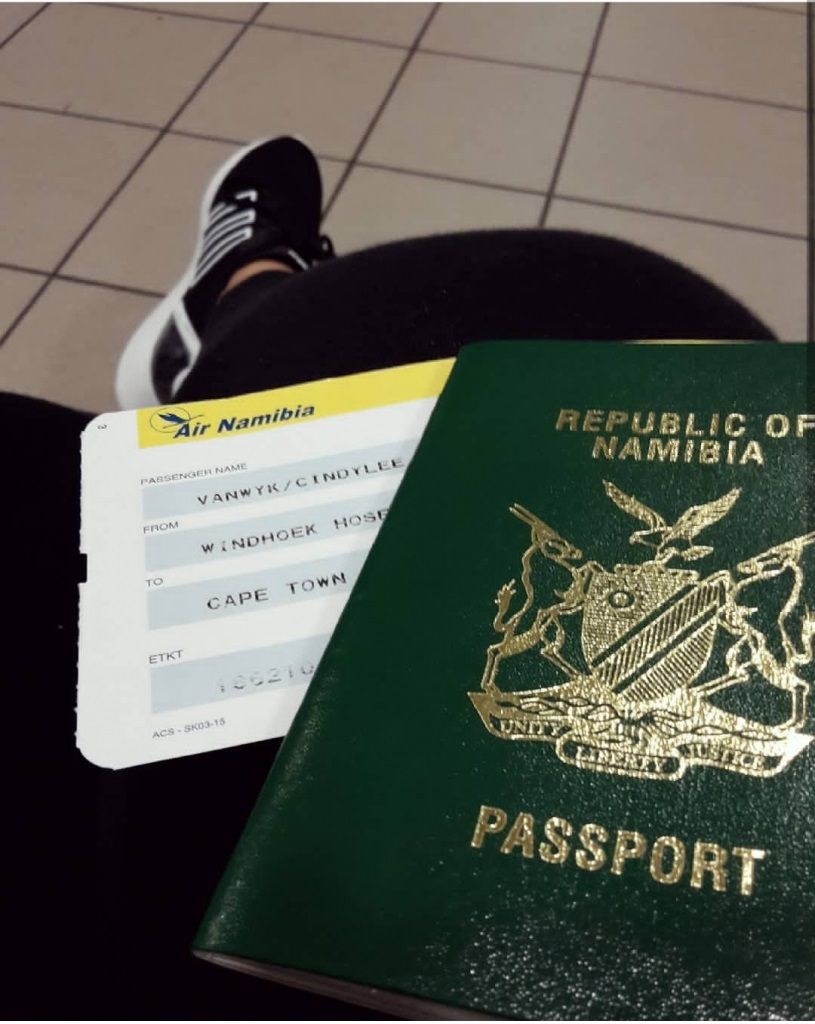
The Vietnam visa for Namibian citizens in 2026 means a single document: the 90-day E-visa. It's processed electronically by Vietnam's immigration authority, valid at every international airport and recognised land border crossing in the country, and issued in either single-entry or multiple-entry format depending on your travel plans.
Here's what you need to prepare before you apply:
- Valid Namibian passport — minimum 6 months of validity beyond your intended departure date from Vietnam; this requirement is enforced strictly at Vietnamese immigration counters
- Digital passport photo — white background, 4×6 cm dimensions, taken within the last 6 months, face fully visible with no glasses or head coverings
- Scanned copy of your passport bio page — clear full-colour scan, no shadows or fingers obscuring the printed text or the machine-readable zone
- Travel dates — planned entry and exit dates; you don't need confirmed tickets at the application stage
- First accommodation address in Vietnam — a hotel name and address for your first night is sufficient
- Valid email address — your E-visa approval PDF is delivered here
- Payment method — Visa, Mastercard, or PayPal
Standard processing takes 3 business days. Urgent processing options exist for travelers who need approval within 2–4 hours. Current fees vary by entry type and processing speed — check the live fee schedule on the portal at time of application, as these are subject to periodic updates.
Once your approval comes through, you'll receive a PDF. Print it out or keep it on your phone — Vietnamese immigration officers accept both formats without issue.
Denied Boarding at WDH: What Happens When Your Visa Isn't Ready
Let me paint a picture. It's early morning at Hosea Kutako International Airport (WDH) in Windhoek. You've packed for two weeks — maybe a week in Hội An, a few days in Hồ Chí Minh City, a side trip to the Mekong Delta. Your connection goes through Johannesburg's OR Tambo and then on to Vietnam. You reach the check-in desk. The agent scans your booking. And then a frown. Your E-visa isn't showing as valid.
Your onward flight connects in under three hours.
The most common reason this happens is not an outright rejection. It's an application submitted too close to the departure date on the standard 3-day track. Or it's a name discrepancy — the name on the E-visa doesn't match the name on the passport exactly, and the airline's system has flagged it. Namibian passport holders face a disproportionate share of this second problem, because the naming conventions across Namibia's many language groups produce names that the E-visa portal handles poorly unless you know exactly how to format them.
If you find yourself in this position at WDH, at Walvis Bay Airport (WVB), or at any transit hub further along your route: don't give up the desk. Call us. Our emergency E-visa team runs around the clock, with priority processing channels that can clear a corrected approval within 2–4 hours. The Super Urgent Visa Service exists specifically for these airport situations — and it has saved flights for travelers in far worse positions than this.
💡 Expert Insight from Stanley Ho: "Over my 23+ years handling travel logistics and Vietnam visa services, the most frequent disruption occurs at the check-in desk due to simple application formatting errors. If you are stuck at the airport and denied boarding, don't panic—our emergency team can secure a new E-visa clearance through priority channels within hours, saving your flight."
The Namibian Passport Trap: Name Formatting Errors That Kill Applications
This section matters more for Namibian applicants than almost any other nationality, and virtually no one writes about it. Namibia has one of the most linguistically diverse naming traditions on the continent — Oshiwambo names, Otjiherero names, Nama/Damara names with specific phonemic conventions, Afrikaans compound surnames, German-origin surnames carried over from colonial-era families, and Khoisan names with click consonants that are represented in writing by characters like !, ǁ, ǀ, and ǂ.
Vietnam's E-visa portal processes names using a standard ASCII-compatible input system. It does not recognise click characters. It will strip or reject non-standard characters entirely.
The rule that protects you from a mismatched E-visa is straightforward: enter your name exactly as it appears in the machine-readable zone at the bottom of your passport bio page. That's the two lines of capital letters running along the bottom edge of the photo page. Whatever is printed there is what Vietnam's immigration system will check against when you arrive.
A few specific patterns to know:
- Khoisan click consonants (!, ǁ, ǀ, ǂ) — these do not appear in machine-readable zones on Namibian biometric passports; they are rendered as standard Latin letters or omitted. Follow whatever the MRZ shows — do not attempt to type a click character into the E-visa form
- Oshiwambo names — names like Ndapewoshali, Nghidinwa, or Uukwambi transliterate cleanly into ASCII; the challenge is often length, as some compound Oshiwambo names overflow field limits. If your full name exceeds the character limit, use the MRZ version, which is already truncated
- Otjiherero names — similar principle; the MRZ version of your name is your safest reference
- Afrikaans surnames with diacritics (e.g. Düring, Jäger) — the MRZ strips these to D, J; enter the MRZ version
- German-origin double-barrel surnames (e.g. von Schlichtkrull, van der Merwe) — enter the full MRZ version including any particles; spacing conventions matter here, so copy exactly
The bottom line: never rely on how your name looks on the front of your passport or on your ID card. Open to the bio page, look at the two lines of machine-readable text at the bottom, and use that version. It takes an extra 60 seconds and prevents a nightmare.
VIP Fast-Track Service at Vietnamese Airports
Flying from Namibia to Vietnam means a long haul — typically 16 to 20 hours total, usually connecting through Johannesburg's OR Tambo (JNB) and then a second leg via a Gulf hub or directly into Southeast Asia. By the time you land in Vietnam, the immigration queue is the last thing you want to spend 45 minutes in.
The VIP Fast-Track service changes that equation. A VisaOnlineVietnam ground representative meets you inside the terminal — at the aircraft bridge or at a designated point before the main immigration hall — pre-verifies your documents, and escorts you through priority lanes. The whole immigration process takes minutes rather than the queue you'd otherwise join.
The service operates at Vietnam's main international entry points: Tân Sơn Nhất International Airport (SGN) in Hồ Chí Minh City, Nội Bài International Airport (HAN) in Hanoi, and Đà Nẵng International Airport (DAD). For travelers heading to beach and resort destinations, it's also available at Cam Ranh International Airport (CXR) serving Nha Trang, and at Phú Quốc International Airport (PQC) for the island. Namibian travelers entering through SGN — which handles the majority of Africa-routed itineraries — consistently find the fast-track service worth every naira of the cost.
How to Apply for Your Vietnam E-Visa in 2026
The application itself is genuinely manageable. Here's the step-by-step:
- Access the portal — use Vietnam's official E-visa portal (evisa.xuatnhapcanh.gov.vn) or an authorised service provider like VisaOnlineVietnam
- Choose your entry type — single entry (one entry, up to 90 days) or multiple entry (multiple entries, up to 90 days per stay)
- Enter personal details with care — this is where the name formatting rules above apply; cross-reference every character against your passport's machine-readable zone before moving on
- Input travel information — planned arrival date, intended port of entry into Vietnam, and first accommodation address
- Upload supporting documents — full-colour passport bio page scan and a compliant photo; review both files for clarity before uploading
- Select your processing speed — standard (3 business days) or urgent options (2–4 hours)
- Pay and submit — an immediate confirmation email acknowledges receipt
- Receive your E-visa — delivered as a PDF; print it or save it to your phone
- Present at Vietnamese immigration — show the E-visa alongside your Namibian passport; paper and digital are both accepted without preference
One timing note that catches people out: "3 business days" refers to Vietnamese working days, not Namibian calendar days. Around Vietnamese public holidays — Tết (Lunar New Year, late January or February), National Day (September 2nd), Liberation Day (April 30th) — processing slows. Apply at least a week before travel, two weeks if your dates fall near any Vietnamese public holiday.
Frequently Asked Questions
Can Namibian citizens get a visa on arrival in Vietnam in 2026? No. The old VOA approval letter system — where you'd apply online, receive an emailed letter, and get stamped at a Vietnamese airport on arrival — has been fully discontinued. It is not a valid entry pathway in 2026. The Vietnam visa for Namibian citizens now means a 90-day E-visa processed and approved before you fly.
How long can Namibian passport holders stay in Vietnam on an E-visa? Up to 90 days per entry on the multiple-entry version, or a single stay of up to 90 days on the single-entry option. Tourist visa extensions are possible in limited circumstances through Vietnam's immigration offices, but approval is not guaranteed and the process is time-consuming.
My Namibian name has Khoisan clicks or long Oshiwambo characters — how do I handle the application? Check the machine-readable zone at the bottom of your passport bio page — those two lines of capital letters are your reference. Click consonants (!, ǁ, ǀ, ǂ) will not appear in the MRZ; they're represented as standard Latin equivalents or omitted. Use the MRZ version of your name in every field. Do not attempt to type click characters into the portal.
Is the Vietnam E-visa valid at all entry points? Yes. As of 2026, the E-visa is valid at all 8 international airports, 16 land border crossings, and 13 sea gates in Vietnam. Whether you enter through Hồ Chí Minh City, Hanoi, Đà Nẵng, or anywhere else, the same E-visa covers you.
Can I extend my Vietnam E-visa once I'm already in-country? Extensions are sometimes granted through Vietnam's immigration department or authorized service providers, but they require paperwork, fees, and a waiting period — and aren't always approved. If you know you'll want more time than your initial visa allows, a much cleaner approach is a short border run to Cambodia, Laos, or Thailand and re-entry on a fresh E-visa.

STANLEY HO
Over the past 23 years in the travel service industry, the growth and success of TRANSOCEAN have stemmed not only from the dedication of our well-trained, enthusiastic, and customer-oriented staff, but also from the exceptional leadership of our Founder and CEO, Mr. STANLEY HO. With more than 20 years of experience in the travel and tourism sector, Mr. STANLEY HO possesses profound knowledge of the market, customer behavior, and modern travel trends. His strategic vision has guided the company toward sustainable growth while maintaining a strong commitment to service quality.