
Vietnam Visa for Israel Citizens
Table of Contents
- Vietnam E-Visa Requirements for Israeli Citizens
- Denied Boarding at TLV: What Happens When Your Visa Isn't Ready
- The Israeli Passport Trap: Name Formatting Errors That Kill Applications
- Skip the Queue: VIP Fast-Track at Vietnam's Airports
- How to Apply for Your Vietnam E-Visa in 2026
- Frequently Asked Questions
Reviewed by: Stanley Ho | Last Updated: May 2026
If you're looking into the Vietnam visa for Israeli citizens in 2026, there's one thing I need you to hear before anything else: the visa on arrival approval letter system is completely dead. Finished. I still see Israeli travelers show up at Ben Gurion (TLV) clutching a VOA letter they paid for on some sketchy website, only to be told by the check-in agent that the document is worthless. That old system has been gone for years. The 90-day Vietnam E-visa applied entirely online is the only route — and once you understand how it works, it's actually pretty painless.
Vietnam is having a moment. Israeli travelers have been discovering it in growing numbers — and why wouldn't they? The food in Hội An alone justifies a 7-hour flight. Tel Aviv to Hồ Chí Minh City connects easily through Bangkok or Kuala Lumpur. The country is affordable, staggeringly beautiful, and genuinely warm toward foreign visitors. The bureaucracy, for once, has mostly kept pace with the demand. El Al and partner airlines offer regular connecting itineraries from TLV to Hà Nội (HAN) and Hồ Chí Minh City (SGN), and the journey is far shorter than most Israelis expect.
The catch — and there is always a catch — is that Israeli passports come with some specific formatting quirks that regularly cause e-visa applications to fail or be delayed. I've been handling travel logistics and Vietnam visa services for over 23 years. The traps I'm going to walk you through in this guide are real, and they cost people their flights every year.
Vietnam E-Visa Requirements for Israeli Citizens
The Vietnam visa for Israeli citizens in 2026 means one thing: the government-issued 90-day electronic visa, applied online before you travel. No embassy queue, no stamping counters at the airport, no approval letter to print and present for a separate fee. Just a clean PDF delivered to your email inbox after you submit your application online.
The 90-day E-visa is available in two forms: single-entry or multiple-entry. For most Israeli tourists doing a two-week loop through Vietnam — say, landing in Hà Nội, traveling south through Huế and Hội An, flying out of Hồ Chí Minh City — single-entry is perfectly adequate. If your itinerary crosses into Cambodia, Laos, or Thailand and returns to Vietnam, you need multiple-entry. Choose the wrong one and you will not be allowed back in at the land border crossing. I've seen this exact situation unfold at Mộc Bài.
What you need to apply:
- A valid Israeli passport with at least 6 months remaining validity from your intended entry date into Vietnam
- At least 2 blank pages in your passport for stamps
- A digital passport-style photo (JPEG or PNG, white background, face forward, both ears visible, no glasses — standard 4×6cm)
- A clear scanned copy of your passport bio page (high resolution, all text fully legible)
- A valid email address to receive your approved visa
- A payment method: Visa, Mastercard, or PayPal
Standard processing runs 3 working days. If you're cutting it close, urgent options deliver in 1–2 working days. Emergency Super Urgent service can push your visa through in as little as 2–4 hours — weekends and public holidays included. Government fees are approximately $25 USD for single-entry and $50 USD for multiple-entry, with service fees added on top depending on your processing tier.
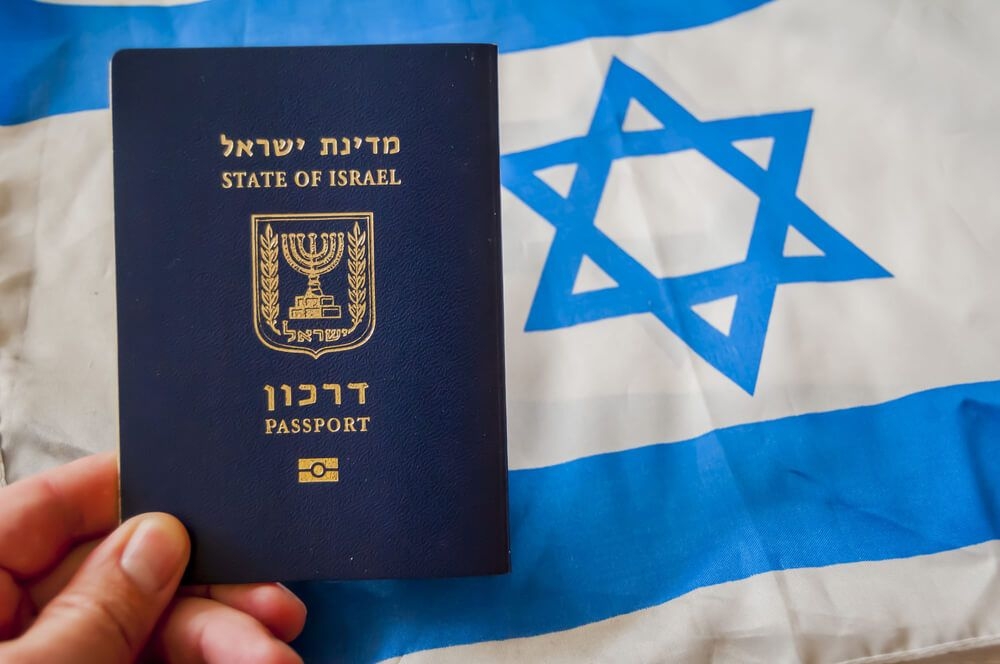
Denied Boarding at TLV: What Happens When Your Visa Isn't Ready
Let me tell you what a bad morning at Ben Gurion International Airport (TLV) looks like.
You're at the El Al check-in counter for your connecting flight to Hồ Chí Minh City via Bangkok. Your bag is checked. You've already done the security interview. The agent asks to see your Vietnam visa. You pull out your phone, open your email — and either it isn't there, or the document shows a name that doesn't match your passport exactly, or the entry date you selected doesn't actually cover your arrival. The agent can't let you on the flight. It departs in three hours.
This is not a hypothetical exercise. It happens regularly at TLV, and the cause is almost always one of two things: the application was submitted too close to departure without enough processing buffer, or a name formatting error on the Israeli passport caused a mismatch or automatic rejection. I'll explain exactly what those errors look like in the next section.
If you are standing at the check-in counter right now and this is happening to you: do not panic, do not try calling the Vietnamese Embassy in Tel Aviv — they cannot issue emergency visas over the phone. Contact an emergency visa service with direct access to Vietnam immigration's priority processing channels. At VisaOnlineVietnam, our Super Urgent service operates around the clock and can secure a new, correctly formatted E-visa approval within 2–4 hours.
💡 Expert Insight from Stanley Ho: "Over my 23+ years handling travel logistics and Vietnam visa services, the most frequent disruption occurs at the check-in desk due to simple application formatting errors. If you are stuck at the airport and denied boarding, don't panic—our emergency team can secure a new E-visa clearance through priority channels within hours, saving your flight."
The lesson: apply at least 5–7 days before your departure. Build the buffer. Read the name section below before you open the application form.
The Israeli Passport Trap: Name Formatting Errors That Kill Applications
This is the section that matters most, and I need you to read it carefully — because Israeli passport holders face a name-entry challenge that is genuinely more complex than most nationalities.
The apostrophe problem. Hebrew uses two letters — ayin (ע) and aleph (א) — that are sometimes romanized in Israeli passports using an apostrophe or a special diacritical mark to represent a glottal stop sound. Names like "Ro'i", "Ra'anan", or "No'a" appear in your passport with that apostrophe intact. The Vietnam E-visa portal does not accept apostrophes in name fields. Entering "Ro'i" will either trigger an error or cause a silent mismatch. The fix: enter the name without the apostrophe — "Roi", "Raanan", "Noa" — exactly as the machine-readable strip at the bottom of your passport bio page renders it.
Hebrew romanization inconsistency. Israel's official Hebrew romanization system has evolved over the decades, and the way names were transliterated in passports issued 10 years ago often differs from how the same name would be transliterated today. "Chana" in an older passport might appear as "Hana" or "Hannah" in a newer one. "Yosef" might appear as "Josef." The Vietnam portal checks your name against your passport's machine-readable zone — not against what you think your name should look like in English. Use the MRZ strip, not your gut.
Arabic-script names on Arab-Israeli passports. Israeli passports issued to Arab-Israeli citizens carry names with Arabic-origin romanizations. Arabic names romanized through Israeli standards often produce forms like "Awad", "Khalil", or "Abd el-Rahman." The Vietnam portal frequently misreads hyphenated or multi-word Arabic given names. Remove hyphens and spaces unless they appear exactly that way in the machine-readable zone of the passport.
The dual-name reality. Some Israeli passport holders carry two name variants — a Hebrew name and a secular Western name — and have inconsistencies between what is printed in the display zone versus what appears in the MRZ strip. The display zone is decorative from the portal's perspective. Only the machine-readable strip matters. Flip to the last two lines of text at the bottom of your passport bio page. Transcribe letter-for-letter.
The one rule that overrides everything else: match the machine-readable zone of your passport, character by character, space by space, and leave out anything the portal won't accept — apostrophes, hyphens where not in MRZ, special characters of any kind.
Skip the Queue: VIP Fast-Track at Vietnam's Airports
You've just landed at Tân Sơn Nhất International Airport (SGN) after a long connecting flight via Bangkok. It's 9pm. The immigration hall looks like a very polite, very slow-moving marathon. Your hotel is in Bến Nghé. You have a morning tour booked.
Vietnam's VIP Airport Fast-Track service is designed for exactly this moment.
The way it works: a licensed concierge agent meets you at the aircraft gate — before you ever reach the immigration queue — and escorts you through a dedicated priority lane reserved for diplomatic-tier processing. You clear immigration while the standard queue is still shuffling. Service is available at the three airports Israeli travelers most commonly use: Tân Sơn Nhất (SGN) in Hồ Chí Minh City, Nội Bài (HAN) in Hà Nội, and Đà Nẵng International (DAD) for those heading to the central coast. If your itinerary ends at a beach resort, Cam Ranh (CXR) near Nha Trang and Phú Quốc (PQC) also offer fast-track.
For business travelers arriving on tight schedules, this is an easy calculation. For families arriving late at night with tired kids after a 10-hour transit, it's equally easy. Book it alongside your E-visa application and both are handled in a single go.
How to Apply for Your Vietnam E-Visa in 2026
The application process for the Vietnam visa for Israeli citizens is clean and entirely online. Here is exactly how it works.
Step 1 — Choose your portal. The official Vietnamese government portal is evisa.xuatnhapcanh.gov.vn. Licensed third-party services like VisaOnlineVietnam submit to the same system but add a human document review layer — they catch name formatting errors before they become rejections.
Step 2 — Complete your personal details. Pull out your physical passport and reference the machine-readable zone at the bottom of the bio page. Enter your name exactly as it appears there. No apostrophes, no special characters, no hyphens unless they appear verbatim in the MRZ.
Step 3 — Upload your documents. Clear, high-resolution scan of your passport bio page, plus your digital photograph meeting Vietnam's photo standards. Blurry, cropped, or low-contrast images are a leading cause of application delays.
Step 4 — Select entry type and dates. Single or multiple entry. Your E-visa start date is the earliest day you are permitted to enter Vietnam — not the application date. Build in at least a 3-day buffer between submission and your earliest planned arrival (more if using standard processing).
Step 5 — Pay and submit. Credit card, debit card, or PayPal. Keep your payment confirmation email.
Step 6 — Receive your approval. Standard processing: 3 working days. Urgent: 1–2 working days. Super Urgent emergency: 2–4 hours. Print it or save digitally — Vietnam immigration accepts both.
Frequently Asked Questions
Can Israeli citizens get a visa on arrival for Vietnam in 2026?
No. The old VOA approval letter system — where you paid a third-party site for a letter and exchanged it for a stamp at the airport counter — is completely obsolete. It no longer exists as a legal tourist entry pathway. The 90-day E-visa applied entirely online before departure is the current standard for all Israeli passport holders, full stop.
How long can Israeli citizens stay in Vietnam on an E-visa?
The Vietnam visa for Israeli citizens allows a stay of up to 90 days per entry, available as single or multiple entry. Your 90-day clock starts from the actual date you enter Vietnam — not the date your visa was approved. That said, your visa must still be used within the validity window you specified at application; you cannot enter on day 89 of a 90-day window and then claim a full 90-day stay.
My Israeli passport name has an apostrophe — what do I enter on the form?
Enter the version that appears in the machine-readable zone of your passport — the two lines of text at the very bottom of the bio page. The MRZ renders names in plain ASCII with no apostrophes, hyphens, or special characters. Whatever you see there, that's what you type. "Ro'i" in the display zone becomes "ROI" in the MRZ — enter "Roi."
Can I extend my Vietnam E-visa once I'm inside the country?
Extensions are technically possible in Vietnam but administratively complex, time-consuming, and genuinely uncertain in outcome. The practical answer: if there's any chance you'll want more than 90 days or plan to exit and re-enter, apply for the multiple-entry version before you travel. Once you're in Vietnam with a single-entry visa, extending requires in-person visits to immigration offices with no guarantee of success.
Is the Vietnam E-visa valid at all border crossings, or only airports?
The Vietnam E-visa is valid at all officially designated international border gates — air, land, and sea. Israeli travelers commonly enter via SGN or HAN, but the same E-visa also covers land crossings like Mộc Bài (into Cambodia) and Lào Cai (into China), as well as seaport entries. There are no entry-point restrictions on the standard tourist E-visa.

STANLEY HO
Over the past 23 years in the travel service industry, the growth and success of TRANSOCEAN have stemmed not only from the dedication of our well-trained, enthusiastic, and customer-oriented staff, but also from the exceptional leadership of our Founder and CEO, Mr. STANLEY HO. With more than 20 years of experience in the travel and tourism sector, Mr. STANLEY HO possesses profound knowledge of the market, customer behavior, and modern travel trends. His strategic vision has guided the company toward sustainable growth while maintaining a strong commitment to service quality.