
Vietnam Visa for Hungarian Citizens
Table of Contents
- Vietnam Visa Options for Hungarian Citizens in 2026: Exemption vs E-Visa
- Denied Boarding at BUD: What Happens When Your E-Visa Has a Name Error
- The Hungarian Passport Trap: Name Order and Double-Acute Accents
- Skip the Queue: VIP Fast-Track at Vietnam's Airports
- How to Apply for Your Vietnam E-Visa in 2026
- Frequently Asked Questions
Reviewed by: Stanley Ho | Last Updated: May 2026
If you're researching the Vietnam visa for Hungarian citizens in 2026, you're dealing with a situation that changed significantly on August 15, 2025 — and most guides online still haven't caught up. Here is the current reality: Hungary is now on Vietnam's visa exemption list. Under Resolution 229/NQ-CP, Hungarian passport holders can enter Vietnam visa-free for up to 45 days per stay, valid until August 14, 2028. That is the good news, and it is a significant upgrade from the old system that required a full E-visa application for every trip.
The catch — and there are always catches — is that 45 days is exactly 45 days. If your trip is 46 days or longer, you need the 90-day E-visa applied online before you fly. The visa exemption has no extension mechanism. You cannot arrive visa-free and then extend to a longer stay inside Vietnam. Plan beyond 45 days and the E-visa is your only legal route.
There is also the question of the old Visa on Arrival approval letter system, which is completely dead and should not appear anywhere in your planning. It is obsolete. Any service still offering it should be ignored entirely.
Vietnam is rewarding Hungarian travelers more generously than ever before. The 45-day exemption opens up real slow-travel possibilities — from the highlands of Hà Giang to the beaches of Phú Quốc, 45 days is enough to get genuinely lost in a country. Let this guide be your starting point.
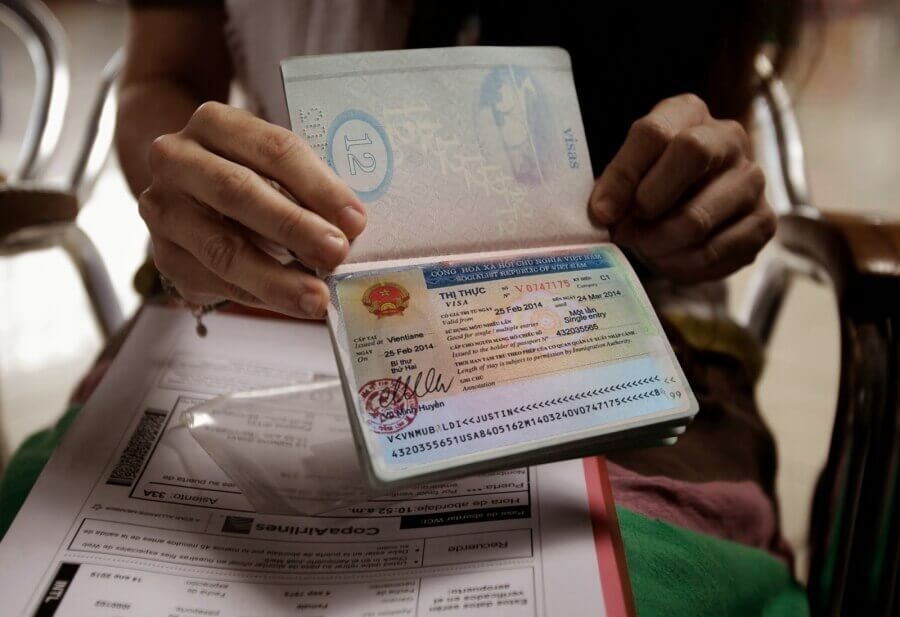
Vietnam Visa Options for Hungarian Citizens in 2026: Exemption vs E-Visa
This is the decision every Hungarian traveler needs to make before booking flights.
Option 1: Visa-Free Entry (up to 45 days)
Hungarian citizens holding an ordinary passport can enter Vietnam without any visa application for stays of up to 45 days. No form, no fee, no waiting period. You arrive at any of Vietnam's 83 international entry points, present your Hungarian passport, and you're in. The passport must be valid for at least 6 months beyond your intended departure from Vietnam, and you should have at least 2 blank visa pages available.
This exemption applies regardless of the purpose of your entry — tourism, business meetings, visiting family. The 45-day clock starts from your first day of entry. It cannot be extended once in-country.
Option 2: 90-Day E-Visa (stays of 46 to 90 days)
If you need more than 45 days, the 90-day E-visa is the answer. Applied entirely online, it is available in single-entry (USD 25) and multiple-entry (USD 50) formats. Processing takes 3 business days under the standard option, with urgent processing available in 2 to 4 hours.
The E-visa is also the better option even for some shorter trips — particularly if you plan to cross into a neighboring country and return to Vietnam during your stay. The visa-free exemption is generally single-entry in practice, while the multiple-entry E-visa gives you the flexibility to move freely across the region.
Requirements for the E-visa:
- Valid Hungarian passport with at least 6 months remaining validity beyond your departure date from Vietnam
- At least 2 blank visa pages
- Digital passport photo — recent, white background, full face clearly visible
- Clear scan of the passport bio page — all text legible, no shadows or distortion
- Valid email address for delivery of the approval document
- Credit or debit card to pay the government fee
- Confirmed travel dates — required at submission
Denied Boarding at BUD: What Happens When Your E-Visa Has a Name Error
Budapest Ferenc Liszt International Airport (BUD) — known to every Hungarian simply as Ferihegy — handles flights to Vietnam typically via major hubs: Dubai (DXB), Doha (DOH), Istanbul (IST), or Kuala Lumpur (KUL). It is a well-connected airport, and getting to Hà Nội (HAN) or Hồ Chí Minh City (SGN) from Budapest is genuinely straightforward once your documents are in order.
The crisis scenario I see repeatedly does not involve the visa-free entry option — that is simple, just show up with your passport. The problems arise with E-visa applicants who make name formatting errors specific to Hungarian passports. The check-in agent at BUD flags a mismatch between the name on the E-visa and the name on the passport. The flight is in two hours.
It is more common than people expect. And the reason it keeps happening is a combination of two uniquely Hungarian traps: the name order reversal, and the double-acute accent characters found only in the Hungarian alphabet. I will explain both in the next section. For now, the key point is this — if you discover a visa problem at BUD or at a transit hub, do not assume the trip is over.
💡 Expert Insight from Stanley Ho: "Over my 23+ years handling travel logistics and Vietnam visa services, the most frequent disruption occurs at the check-in desk due to simple application formatting errors. If you are stuck at the airport and denied boarding, don't panic — our emergency team can secure a new E-visa clearance through priority channels within hours, saving your flight."
Our Super Urgent Visa Service delivers emergency E-visa approvals in 2 to 4 hours. Whether you're still at BUD or you've discovered a problem at a transit counter in Dubai (DXB), call us immediately. The service exists precisely for this situation.
The Hungarian Passport Trap: Name Order and Double-Acute Accents
This is the section that no generic Vietnam visa guide includes, and it is the one Hungarian applicants most need to read before touching the E-visa application form.
Trap 1: Hungarian Name Order
Hungary is the only country in Europe where names are written surname-first in everyday use. Kovács János is not a person named Kovács with a middle name of János — his family name is Kovács and his given name is János. Written in English convention, he would be János Kovács.
Hungarian passports, being biometric EU documents, present the name in the Western international order on the bio page — given name first, surname second — to comply with international standards. So Kovács János's passport shows JANOS KOVACS in the given name / surname fields respectively. This is correct for the E-visa application.
The trap occurs when a Hungarian applicant instinctively writes their name in Hungarian order — surname first — on the visa form, because that is simply how names work in Hungary. The result: the E-visa has the given name and surname swapped compared to the passport. Vietnam's immigration system will flag this mismatch, and the airline's document check will usually catch it first.
The rule: Always follow the field labels on the E-visa form. Put your given name (keresztnév / utónév) in the Given Name field, and your family name (vezetéknév) in the Surname field — exactly as it appears on the bio page of your passport, not as you would naturally write your name in Hungarian.
Trap 2: The Double-Acute Accent — ő and ű
The Hungarian alphabet contains characters that exist in no other European language: ő (o with double acute accent) and ű (u with double acute accent). They appear constantly in Hungarian names — Győr, Kőváry, Kürtős, Füredi, Tünde, Sző. And the Vietnam E-visa portal, which accepts only plain ASCII characters, cannot process them.
The full list of Hungarian special characters that must be stripped:
- á → a (a with acute)
- é → e (e with acute)
- í → i (i with acute)
- ó → o (o with acute)
- ö → o (o with diaeresis)
- ő → o (o with double acute — unique to Hungarian)
- ú → u (u with acute)
- ü → u (u with diaeresis)
- ű → u (u with double acute — unique to Hungarian)
So a name like Győrffy Ödön becomes Gyorffy Odon in the E-visa application. Kürtössy Tünde becomes Kurtosy Tunde. And so on, for every character in every name field.
Do not rely on the system's auto-fill from your passport scan — optical character recognition handles these characters inconsistently. Type every name manually, character by character, from your physical passport bio page. After completing the form, compare the entries against your passport. Then check again.
Skip the Queue: VIP Fast-Track at Vietnam's Airports
Flights from Budapest (BUD) to Vietnam run 12 to 16 hours including connections through Dubai, Doha, or Istanbul. By the time you land at Tân Sơn Nhất (SGN) or Nội Bài (HAN), you have been travelling for the better part of a day. Walking into a standard immigration queue of 45 to 90 minutes at that point is exactly as grim as it sounds.
The VIP Airport Fast-Track service at Vietnam's major international airports eliminates this entirely. A personal concierge meets you at the gate — before you reach the general immigration hall — and escorts you through a priority diplomatic lane. Documents processed, stamps applied, and you're through while other passengers are still in line.
Available at Nội Bài International Airport (HAN) in Hà Nội, Tân Sơn Nhất International Airport (SGN) in Hồ Chí Minh City, and Đà Nẵng International Airport (DAD). For travelers heading to Nha Trang, also at Cam Ranh (CXR). For Phú Quốc island, at Phú Quốc International Airport (PQC).
This service makes particular sense for E-visa holders who have been through BUD and a transit hub. It also works smoothly for visa-free travelers — you still pass through immigration, and the fast-track lane saves significant time regardless of your entry method.
How to Apply for Your Vietnam E-Visa in 2026
For Hungarian travelers staying beyond 45 days, or those who want the flexibility of multiple-entry, the E-visa process in 2026 is fully online:
Step 1 — Go to the portal. The official Vietnam Immigration Department E-visa portal is the government route. VisaOnlineVietnam provides the same application with manual verification — particularly useful for catching the Hungarian name order and diacritic issues before they become a problem at Ferihegy.
Step 2 — Enter your personal details. Work from your physical passport. Enter your given name in the Given Name field and your surname in the Surname field, as shown on the bio page — in Western order, not Hungarian order. Strip all accents, including ő → o and ű → u. Type manually; do not copy-paste from a scan.
Step 3 — Upload your documents. A clear scan of the passport bio page and a recent passport-format photo. Rescan if the image is blurry or the text is hard to read — auto-fill errors from poor scans are a common source of name mismatches.
Step 4 — Select entry type and dates. Single entry at USD 25 for a straightforward trip. Multiple entry at USD 50 if you plan to visit neighbouring countries — Cambodia, Laos, Thailand — and return to Vietnam.
Step 5 — Pay the fee. By card, through the portal. Non-refundable.
Step 6 — Receive approval by email. Standard processing: 3 business days. Urgent: 2 to 4 hours. Save the document to your phone, email a backup copy to yourself, and optionally print one. Vietnam accepts both digital and printed copies — carry both through transit.
Frequently Asked Questions
Do Hungarian citizens need a visa to enter Vietnam in 2026?
Not for stays up to 45 days. Under Resolution 229/NQ-CP, effective August 15, 2025 through August 14, 2028, Hungarian passport holders can enter Vietnam visa-free for up to 45 days per entry. For stays of 46 to 90 days, the 90-day E-visa applied online is required. The old Visa on Arrival approval letter system is completely dead and is not a valid option under any circumstances.
Can I extend my visa-free stay beyond 45 days once I'm in Vietnam?
No. The 45-day visa-free exemption for Hungarian citizens cannot be extended inside Vietnam. If you want to stay longer than 45 days, you must apply for the 90-day E-visa before you travel. Attempting to extend a visa-free stay or overstaying will result in fines and potential complications with future entry.
My Hungarian name has ő or ű in it. How do I enter this on the E-visa application?
Strip the double-acute accents and enter plain Latin equivalents: ő becomes o, ű becomes u. Apply the same rule to all Hungarian diacritics — á → a, é → e, í → i, ó → o, ö → o, ú → u, ü → u. Type the name manually from your passport, character by character. Do not rely on the portal's optical scan auto-fill — it handles these characters inconsistently.
Hungarian names are written surname-first. Does that affect my E-visa application?
Yes — this is one of the most common errors Hungarian applicants make. The E-visa application uses Western field convention: Given Name first, Surname second. Your Hungarian passport bio page also uses this international order. Follow the passport bio page, not the Hungarian name convention. Put your given name (utónév) in the Given Name field and your family name (vezetéknév) in the Surname field.
Is the visa-free entry or E-visa accepted at all Vietnam entry points?
Yes. Both the visa-free exemption and the E-visa are valid at all 83 international entry points across Vietnam — airports, land border crossings, and sea ports. Hungarian travelers typically arrive by air at Nội Bài (HAN) in Hà Nội or Tân Sơn Nhất (SGN) in Hồ Chí Minh City.

STANLEY HO
Over the past 23 years in the travel service industry, the growth and success of TRANSOCEAN have stemmed not only from the dedication of our well-trained, enthusiastic, and customer-oriented staff, but also from the exceptional leadership of our Founder and CEO, Mr. STANLEY HO. With more than 20 years of experience in the travel and tourism sector, Mr. STANLEY HO possesses profound knowledge of the market, customer behavior, and modern travel trends. His strategic vision has guided the company toward sustainable growth while maintaining a strong commitment to service quality.