
Vietnam Visa for Gabonese Citizens
Table of Contents
- Vietnam E-Visa Requirements for Gabonese Citizens
- Denied Boarding at LBV: What Happens When Your Visa Isn't Ready
- The Gabonese Passport Trap: Name Formatting Errors That Kill Applications
- VIP Fast-Track Service at Vietnamese Airports
- How to Apply for Your Vietnam E-Visa in 2026
- Frequently Asked Questions
If you're looking into the Vietnam visa for Gabonese citizens in 2026, you're doing something that very few travel guides have bothered to do: getting specific. Gabon is a small nation — barely 2.3 million people — and the existing information online for Gabonese travelers heading to Vietnam is either dangerously outdated or nonexistent. That changes here.
Vietnam is worth the effort. Hạ Long Bay at sunrise, the lantern-hung streets of Hội An, the sensory avalanche of Hồ Chí Minh City's Bến Thành market — these are places that stay with you. For travelers flying out of Libreville, the routing will almost certainly take you through Addis Ababa, Casablanca, or a Gulf hub like Dubai or Doha before you reach Southeast Asia. It's a serious journey. Getting your entry documentation right before departure matters.
Let me be direct about something. Any resource still describing a "visa on arrival approval letter" — where you apply online, receive a letter, and get stamped at a Vietnamese airport on arrival — is giving you obsolete information. That system does not exist in 2026. It's been discontinued, and there's no sign of its return. The 90-day Vietnam E-visa is the current and only standard entry mechanism for Gabonese citizens. It is entirely processed online, before you travel. No embassy visit. No courier of your passport. Nothing that requires you to leave Libreville — or wherever you are — to sit in a waiting room.
Vietnam E-Visa Requirements for Gabonese Citizens
The Vietnam visa for Gabonese citizens in 2026 is the 90-day E-visa, available in single-entry or multiple-entry format. It's issued electronically by Vietnam's immigration authority, valid at all 8 international airports and all recognised land and sea border crossings across the country. You apply, you wait for an emailed PDF, you travel.
Here is what you need to have ready before you begin:
- Valid Gabonese passport — minimum 6 months of validity beyond your planned departure date from Vietnam; Vietnamese immigration officers apply this requirement without exception
- Digital passport photo — white background, 4×6 cm, taken within the past 6 months, face clearly visible without glasses or head coverings
- Scanned copy of your passport bio page — full-colour, sharp, completely free of shadows or obstructions across the printed data and the machine-readable zone at the bottom
- Travel dates — your intended entry and exit dates; confirmed flight tickets are not required at the application stage
- First accommodation address in Vietnam — a hotel name and address for your first night is sufficient
- Valid email address — your approved E-visa PDF is delivered to this address
- Payment method — Visa, Mastercard, or PayPal accepted
Standard processing completes within 3 Vietnamese business days. Urgent processing options deliver approval within 2–4 hours. Fees vary by entry type and processing speed — check the current schedule on the portal at time of application.
Once your E-visa arrives as a PDF, print it or keep it on your phone. Vietnamese immigration accepts both equally.
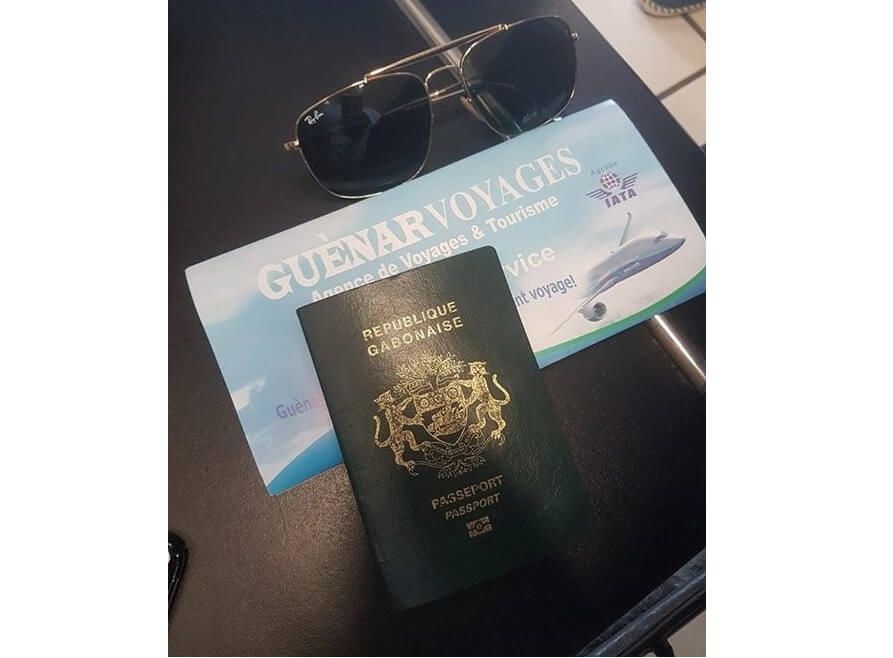
Denied Boarding at LBV: What Happens When Your Visa Isn't Ready
It's early morning at Léon-Mba International Airport (LBV) in Libreville. Your routing takes you through Addis Ababa's Bole International Airport (ADD) with Ethiopian Airlines, then onward to Vietnam. You've packed for three weeks. You reach the check-in desk. The agent inputs your details. And then she pauses.
Your E-visa is flagged.
In 23 years of handling Vietnam visa emergencies, I can tell you that the overwhelming majority of these situations trace back to one thing: a name mismatch between the E-visa document and the passport. Not a rejection from Hanoi. Not a policy change. A name that looks like it matches — but doesn't, precisely, in the way Vietnam's scanning system compares it against the machine-readable zone of your passport.
For Gabonese travelers, this is a problem with specific texture. Gabon's naming landscape sits at the intersection of its French colonial history and more than 40 distinct Bantu ethnic groups — Fang, Myene, Punu, Nzebi, Teke, Kota, Vili, and others — each with naming traditions that produce names the French administrative system has historically rendered inconsistently across different documents. More on this in a moment.
If you find yourself in this position at LBV — or at any transit hub along your route — do not leave the desk. Call us. Our emergency E-visa team operates 24 hours a day with priority processing channels that can produce a corrected, approved E-visa within 2–4 hours. The Super Urgent Visa Service has rescued travelers in far worse situations than a formatting error.
💡 Expert Insight from Stanley Ho: "Over my 23+ years handling travel logistics and Vietnam visa services, the most frequent disruption occurs at the check-in desk due to simple application formatting errors. If you are stuck at the airport and denied boarding, don't panic—our emergency team can secure a new E-visa clearance through priority channels within hours, saving your flight."
The Gabonese Passport Trap: Name Formatting Errors That Kill Applications
This section is, in my view, the most important part of this entire guide for Gabonese applicants. Vietnam's E-visa portal accepts only standard Latin characters — no diacritical marks, no accented letters, no special characters of any kind. The portal's input system matches what you enter against the machine-readable zone (MRZ) of your passport. The MRZ, by international standard (ICAO Doc 9303), strips all diacritics and renders names using only unaccented capital Latin letters.
Gabon's naming conventions create several specific categories of error here.
French given names with diacritical marks are extremely common among Gabonese citizens — names like René, Élodie, Théophile, Céleste, Agnès, Jérôme, and Benoît appear widely, particularly in the Christian community that comprises around 80% of the population. In the visual zone of the passport, these names are printed correctly with their accents. In the MRZ, however, all accents are stripped: René becomes RENE, Élodie becomes ELODIE, Théophile becomes THEOPHILE. Enter the unaccented MRZ version in your E-visa application. If you type the accent, the portal will either reject it or strip it in a way that may not match the MRZ rendering exactly — and the mismatch is what creates a problem at immigration.
Bantu-language surnames from Gabon's many ethnic groups present a different challenge: their transliterations into French during the colonial era were not standardised, and the same name can appear spelled differently across your birth certificate, national ID, and passport. Names like Mboumba, Ndong, Mouanda, Ngomo, Obame, Nze, Minko, Nguema, and Moussavou may show variant spellings across different documents. The passport MRZ is the only version that matters for your Vietnam E-visa. Open your passport to the bio page, look at the two lines of capital letters at the very bottom, and use that exact spelling — regardless of what your other documents show.
Apostrophes in names are another trap. The name M'ba — the surname of Léon M'ba, Gabon's first president, for whom Libreville's airport is named — contains an apostrophe that many Gabonese surnames share. In the MRZ, apostrophes are rendered as a single filler character or omitted entirely. The convention varies by passport issuing authority and generation of passport. Check your specific MRZ: if M'ba appears as MBA in your MRZ, enter MBA. If it appears as M BA (with a space), enter M BA. Follow the MRZ precisely — do not insert an apostrophe into the E-visa form.
Hyphenated given names common in French-origin naming traditions — Jean-Pierre, Marie-Claire, Gaëlle-Victoire — follow the same principle. Hyphens may appear in the MRZ as a space, as a single omitted character, or rendered without any separator. Check and copy. The MRZ is the reference, not your preferred written form of your name.
The universal rule: open your passport to the bio page. Find the two lines of capital letters at the bottom edge — that is the machine-readable zone. Write those lines down on paper before you touch the E-visa application. Enter every name field in the form using that exact rendering, character by character. No guessing. No improvising from memory. The MRZ is what Vietnamese immigration scans.
VIP Fast-Track Service at Vietnamese Airports
Flying from Libreville to Vietnam involves at minimum one intercontinental leg — typically through Addis Ababa (ADD) with Ethiopian Airlines, Casablanca (CMN) with Royal Air Maroc, or a Gulf hub like Dubai (DXB) or Doha (DOH). Total travel time from LBV to your Vietnamese destination is realistically 16 to 22 hours. By the time you land in Vietnam, a 45-minute immigration queue is the last thing you want.
The VIP Fast-Track service eliminates that entirely. A VisaOnlineVietnam ground representative meets you inside the Vietnamese terminal — at the aircraft bridge or at a designated arrival point before the main immigration hall — pre-verifies your documents, and escorts you through priority processing lanes. Immigration clearance takes minutes, not the better part of an hour.
The service runs at Vietnam's busiest international gateways: Tân Sơn Nhất International Airport (SGN) in Hồ Chí Minh City, Nội Bài International Airport (HAN) in Hanoi, and Đà Nẵng International Airport (DAD). It also operates at Cam Ranh International Airport (CXR) near Nha Trang, and at Phú Quốc International Airport (PQC) for island arrivals. Most Libreville-routed itineraries arrive through SGN — Ethiopian Airlines and Royal Air Maroc connections both typically land in Hồ Chí Minh City first. The fast-track service there is seamlessly run and worth adding after a long intercontinental journey.
How to Apply for Your Vietnam E-Visa in 2026
Once you know how your name appears in your passport's machine-readable zone, the application itself moves quickly:
- Access the portal — use Vietnam's official E-visa portal (evisa.xuatnhapcanh.gov.vn) or an authorised provider like VisaOnlineVietnam
- Select entry type — single entry (one entry, up to 90 days) or multiple entry (unlimited entries, up to 90 days per stay)
- Enter personal details — with your passport open to the bio page, copy your name from the machine-readable zone character by character; apply the diacritic-stripping and apostrophe rules described above
- Fill in travel information — planned Vietnam arrival date, intended port of entry, first accommodation address
- Upload your documents — a clear full-colour scan of your passport bio page and a compliant passport photo; review both files before uploading
- Select processing speed — standard (3 Vietnamese business days) or urgent (2–4 hours)
- Pay and submit — a confirmation email arrives immediately acknowledging receipt
- Receive your E-visa PDF — print it or keep it on your phone
- Present at Vietnamese immigration — show the E-visa alongside your Gabonese passport; paper and digital are both accepted without any preference
Two timing points worth noting: "3 business days" means Vietnamese working days, not Gabonese calendar days. And around Vietnamese public holidays — Tết (Lunar New Year, late January or February), Liberation Day (April 30th), and National Day (September 2nd) — processing times extend noticeably. Apply at least a full week before departure; two weeks if your dates fall anywhere near a Vietnamese public holiday.
Frequently Asked Questions
Can Gabonese citizens get a visa on arrival in Vietnam in 2026? No. The VOA approval letter system — where you'd pay for an emailed approval letter and receive a stamp from Vietnamese immigration on arrival — has been permanently discontinued. It is not a valid entry option in 2026. The Vietnam visa for Gabonese citizens means a 90-day E-visa obtained and approved before you board any aircraft.
How long can Gabonese passport holders stay in Vietnam on an E-visa? Up to 90 days per entry on the multiple-entry version, or a single continuous stay of up to 90 days on the single-entry option. In-country extensions are available in limited circumstances through Vietnam's immigration authority, but approval is not guaranteed and involves fees and paperwork.
My Gabonese name has French accents or a Bantu-origin spelling — how do I enter it correctly? Strip all diacritical marks and enter the unaccented version of any French given names (René → RENE, Élodie → ELODIE). For Bantu-origin surnames, use the spelling shown in the machine-readable zone at the bottom of your passport bio page — not your national ID, not your birth certificate. For names with apostrophes like M'ba, check the MRZ: if it shows MBA, enter MBA; if it shows M BA, enter M BA. The MRZ is the authority.
Is the Vietnam E-visa valid at all entry points? Yes. As of 2026, the E-visa is accepted at all 8 international airports, 16 land border crossings, and 13 sea border gates in Vietnam. Whether you arrive in Hồ Chí Minh City, Hanoi, Đà Nẵng, or anywhere else, your E-visa is valid at the point of entry.
Can I extend my Vietnam E-visa once I'm in the country? Extensions are sometimes possible through Vietnam's immigration department or authorised service providers, but they require documentation, fees, and processing time — and aren't always granted. If you need more than 90 days, the standard approach is a short border run to Cambodia, Laos, or Thailand and re-entry on a fresh E-visa.

STANLEY HO
Over the past 23 years in the travel service industry, the growth and success of TRANSOCEAN have stemmed not only from the dedication of our well-trained, enthusiastic, and customer-oriented staff, but also from the exceptional leadership of our Founder and CEO, Mr. STANLEY HO. With more than 20 years of experience in the travel and tourism sector, Mr. STANLEY HO possesses profound knowledge of the market, customer behavior, and modern travel trends. His strategic vision has guided the company toward sustainable growth while maintaining a strong commitment to service quality.