
Vietnam Visa for Chinese Citizens
Table of Contents
- Vietnam E-Visa Requirements for Chinese Citizens
- Denied Boarding at PEK: What Happens When Your Visa Isn't Ready
- The Chinese Passport Trap: Name Formatting Errors That Kill Applications
- Skip the Queue: VIP Fast-Track at Vietnam's Airports
- How to Apply for Your Vietnam E-Visa in 2026
- Frequently Asked Questions
Reviewed by: Stanley Ho | Last Updated: May 2026
If you're researching the Vietnam visa for Chinese citizens in 2026, you're already doing better than the hundreds of travelers we see each month who walk up to a check-in counter at PEK or PVG with outdated information — and get denied boarding on the spot.
Vietnam is having a moment. The country drew record numbers of Chinese tourists in 2025, and 2026 shows absolutely no sign of that slowing down. Da Nang, Hoi An, Phu Quoc — these destinations are on every Chinese traveler's bucket list. But there's one thing standing between you and that beach chair in Cam Ranh: a valid Vietnam e-visa. And I'm going to tell you exactly how to get it right.
Here's the uncomfortable truth I share with every client who contacts us: the old Visa on Arrival approval letter system is dead. Completely gone. Don't let anyone sell you an "approval letter" in 2026 — it's an obsolete relic that will get you stranded. The 90-day Vietnam E-visa is the only legal standard for tourists today, and honestly, it's a far better system once you understand how it works.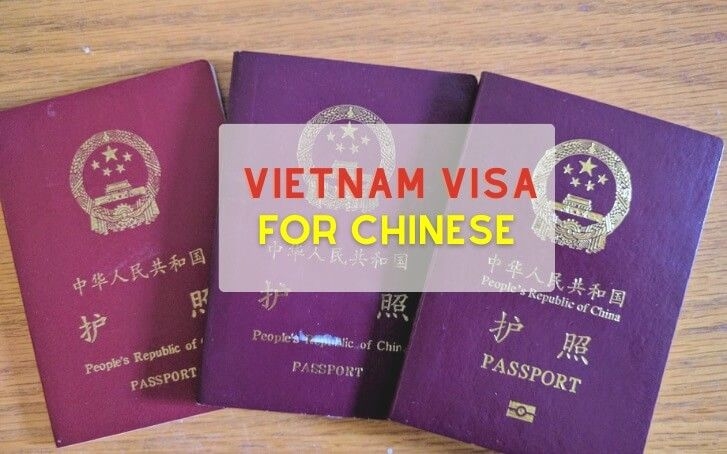
Vietnam E-Visa Requirements for Chinese Citizens
The Vietnam e-visa for Chinese citizens is valid for up to 90 days, with your choice of single or multiple entry. That flexibility is genuinely useful — multiple entry means you can pop over to Cambodia or Laos for a side trip and re-enter Vietnam without applying all over again.
Here's what you need before you start the application:
- Valid Chinese passport — minimum 6 months validity beyond your intended date of entry into Vietnam, with at least 2 blank pages
- Digital passport photo — recent, clear, white background, JPEG format; the portal is strict about this
- Passport bio-data page scan — high resolution, no glare, no cropping
- Entry and exit dates — you need to commit to approximate travel dates; the e-visa is tied to them
- Credit or debit card for online payment
Processing time on the standard track runs 3 business days. If your trip is approaching fast, an urgent service can turn it around in 2 to 4 hours. The government fee for the e-visa is $25 USD for single entry and $50 USD for multiple entry. If you apply through a trusted third-party service, a service fee is added on top — in exchange for someone reviewing your application before submission and catching the formatting errors that cause the majority of rejections.
Denied Boarding at PEK: What Happens When Your Visa Isn't Ready
Picture this. It's 7:15 AM at Beijing Capital International Airport. Your flight to Ho Chi Minh City boards in three hours. You've got your bags, your family is with you, you've been planning this trip for months. You reach the Air China check-in counter, hand over your passport — and the agent tells you your e-visa has a name discrepancy and cannot be accepted.
That panic is real. I've taken calls from travelers in exactly this situation at PEK, PVG in Shanghai, and CAN in Guangzhou.
The most common trigger isn't a missed document — it's a name formatting error that the applicant didn't even realize existed. Chinese passports romanize names in a specific way, and if the name on your e-visa doesn't match your passport romanization character-for-character, Vietnamese immigration systems flag it. One wrong hyphen or a missing letter in a compound pinyin name is enough.
When this happens, time becomes the only currency that matters.
💡 Expert Insight from Stanley Ho: "Over my 23+ years handling travel logistics and Vietnam visa services, the most frequent disruption occurs at the check-in desk due to simple application formatting errors. If you are stuck at the airport and denied boarding, don't panic—our emergency team can secure a new E-visa clearance through priority channels within hours, saving your flight."
Our Super Urgent Visa Service is designed specifically for this scenario. Emergency clearance within 2 to 4 hours — priority processing through channels that standard applications simply don't access. It costs more than a standard application. It costs significantly less than a missed flight.
The Chinese Passport Trap: Name Formatting Errors That Kill Applications
This section exists because Chinese passport holders face a specific, underappreciated formatting challenge that trips up applications constantly — and no one warns travelers about it clearly enough.
Chinese passports render names in Hanyu Pinyin romanization. A name like 李明阳 becomes LI MINGYANG in the machine-readable zone of the passport. The Vietnam e-visa portal requires you to enter your name exactly as it appears there. No spaces between a compound given name like MINGYANG. No inserting a hyphen. No separating it into two fields.
Where it gets complicated is with compound surnames and given names that span three or four syllables. The portal has character limits per field. If you try to enter ZHANGFENG as two words — ZHANG and FENG — when your passport shows it as one — it will not match. Your visa gets issued with the wrong name. Vietnamese immigration catches it at the border.
Then there's the issue of bilingual Chinese-English passports. Some older Chinese passports have the romanized name in a slightly different format from newer biometric e-passports. The e-visa portal reads the machine-readable zone, not the visual observation zone. Always use the name exactly as shown in the bottom two lines of your passport's bio-data page — the lines that look like gibberish but are the actual data the immigration system compares against.
My standard advice to Chinese applicants: before submitting your e-visa application, open your passport to the photo page, look at the bottom two lines, and copy your name from there — not from how you typically write your name in English.
Skip the Queue: VIP Fast-Track at Vietnam's Airports
You've landed at Tan Son Nhat (SGN) in Ho Chi Minh City. You clear the jetway and see the immigration queue snaking back 200 meters. It's 2 PM on a Saturday. You've just flown four hours from Beijing.
Or you don't. Because you booked the VIP Fast-Track service.
This is the part of the journey most first-time visitors to Vietnam don't know exists. A personal concierge meets you at the gate — before you even reach the immigration hall. They walk you through a priority diplomatic-adjacent lane, handle the formalities, and have you through arrivals while the standard queue is still barely moving. It's available at all major Vietnam international entry points: Tan Son Nhat (SGN) in Ho Chi Minh City, Noi Bai (HAN) in Hanoi, Da Nang (DAD), and Cam Ranh (CXR) for travelers heading to Nha Trang.
For business travelers. For families with children. For anyone who considers their time worth something. It's not a luxury — it's just a very practical decision.
How to Apply for Your Vietnam E-Visa in 2026
The process is fully online. No embassy visit required. No mailing your passport anywhere. Here's how it works:
- Go to the official Vietnam e-visa portal at evisa.gov.vn — or apply through a trusted service like VisaOnlineVietnam.com if you want a professional review before submission
- Complete the application form — enter your personal details exactly as they appear in your passport's machine-readable zone; re-read the name formatting section above before this step
- Upload your photo and passport scan — JPEG format, white background for the photo, sharp and unobstructed for the passport scan; blurry scans are a top rejection reason
- Select your visa type — single entry (sufficient for a straightforward trip) or multiple entry (better if you're crossing into Laos, Cambodia, or making multiple Vietnam legs)
- Pay the government fee — $25 USD single entry, $50 USD multiple entry; have a card ready
- Receive your e-visa by email — standard processing takes 3 business days; urgent processing takes 2 to 4 hours
- Print it or save it digitally — Vietnam immigration accepts both; I personally recommend having both
One thing Chinese travelers sometimes ask: do I still need to contact the Vietnamese Embassy in Beijing or the consulates in Shanghai, Guangzhou, or Chengdu? The answer is no. The entire Vietnam visa for Chinese citizens process is handled online in 2026. There is no need to appear in person anywhere.
Frequently Asked Questions
Can Chinese citizens get a visa on arrival in Vietnam in 2026? The old VOA approval letter system that many travelers remember from before 2023 is gone — completely discontinued and no longer valid. What people sometimes still call "visa on arrival" in 2026 is effectively the e-visa process, applied online before departure. You cannot show up at a Vietnamese airport immigration counter without a valid visa and expect to be processed. Don't attempt it.
How long is the Vietnam E-visa valid for Chinese passport holders? The standard e-visa for Chinese citizens covers stays of up to 90 days, single or multiple entry. The visa is valid from the entry date you specify in your application. Multiple entry allows re-entry after departing Vietnam, which is practical for travelers doing multi-country Southeast Asia itineraries.
My Chinese name romanization looks unusual on my passport. Will that cause problems? Potentially, yes — if you don't handle it carefully. Always copy your name character-for-character from the machine-readable zone at the bottom of your passport's photo page. Don't guess, don't approximate, and don't use your preferred English name spelling. The Vietnam immigration system does an exact-match comparison. One character off and you're flagged at the border.
Can I extend my Vietnam E-visa once I'm already in the country? Extensions are possible but require going through the Vietnamese immigration authority (Cục Quản lý Xuất Nhập cảnh) in person. The process takes several business days and is not guaranteed. My strong recommendation: if you know you'll need more than 90 days, apply for multiple entry from the start and plan your travel dates accordingly — it saves significant hassle.
Is the Vietnam E-visa accepted at all airports and border crossings? The e-visa is accepted at 13 international airports, 16 land border crossings, and 13 seaports across Vietnam. For Chinese travelers, the most common entry points are Tan Son Nhat in Ho Chi Minh City (SGN), Noi Bai in Hanoi (HAN), and Da Nang (DAD). If you're entering by land from Yunnan or Guangxi provinces, the e-visa covers the major designated land crossings — but confirm your specific crossing is on the authorized list before departure.

STANLEY HO
Over the past 23 years in the travel service industry, the growth and success of TRANSOCEAN have stemmed not only from the dedication of our well-trained, enthusiastic, and customer-oriented staff, but also from the exceptional leadership of our Founder and CEO, Mr. STANLEY HO. With more than 20 years of experience in the travel and tourism sector, Mr. STANLEY HO possesses profound knowledge of the market, customer behavior, and modern travel trends. His strategic vision has guided the company toward sustainable growth while maintaining a strong commitment to service quality.