Vietnam Visa for Austrian Citizens
Table of Contents
- Vietnam E-Visa Requirements for Austrian Citizens
- Denied Boarding at VIE: What Happens When Your Visa Isn't Ready
- The Austrian Passport Trap: Name Formatting Errors That Kill Applications
- VIP Fast-Track & E-Gate Services at Vietnam Airports
- How to Apply for Your Vietnam E-Visa in 2026
- Frequently Asked Questions
Reviewed by: Stanley Ho | Last Updated: May 2026
If you're researching the Vietnam visa for Austrian citizens in 2026, you're already ahead of the hundreds of travelers who still think Visa on Arrival letters are a thing. They're not. That system is dead. Gone. Buried somewhere around 2023 and the sooner we stop pretending otherwise, the better off everyone will be.
Vietnam is pulling in record numbers of European visitors right now. Hoi An, the Mekong Delta, a motorbike ride through the Central Highlands — there's a reason your Instagram feed is full of Austrians tagging themselves in places like Da Lat and Ninh Binh. The country is genuinely spectacular, and the Vietnamese government has finally made access easy. One single e-visa, 90 days, applied for entirely online in about twenty minutes. But — and here's where people trip up — the application is unforgiving about errors. Name mismatches, outdated passport photos, German-language character confusion. These are real problems, not theoretical ones, and I'll walk you through every single one.
Vietnam E-Visa Requirements for Austrian Citizens
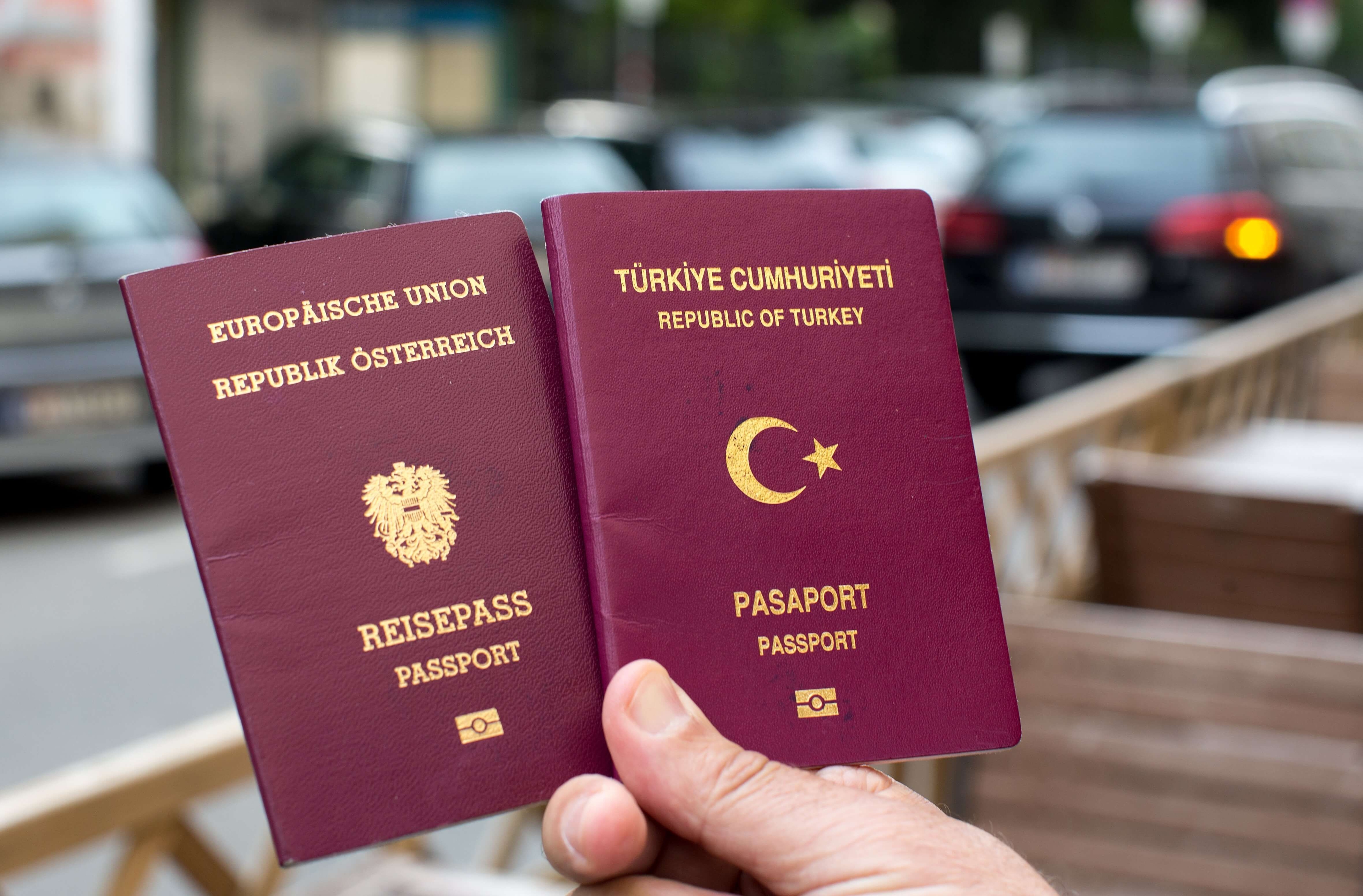
The Vietnam visa for Austrian citizens in 2026 is a 90-day e-visa — either single entry or multiple entry. That's it. No embassy appointment. No approval letter. No fax machine involved anywhere in the process. You apply online, you wait (usually three business days on the standard track), and your visa arrives by email. Simple, in theory.
Here's exactly what you need before you sit down to fill out the application:
- Valid Austrian passport — minimum 6 months of remaining validity beyond your intended travel dates; the portal will reject you otherwise
- Passport-quality digital photo — plain white or light background, face centred, no glasses; taken within the last six months
- Scanned passport bio-data page — a clean, high-resolution scan; blurry uploads are a leading cause of rejection
- Travel itinerary details — your intended entry and exit points in Vietnam, and approximate dates
- Valid email address — your approved e-visa arrives here as a PDF
Processing time runs three business days under the standard service. If your trip is close, urgent processing brings that down to one business day. And if you're literally at the airport? We'll get to that.
The e-visa fee is paid at the time of application — government fees apply, plus any service charge if you use a third-party processing service. Multiple-entry is slightly more expensive than single-entry, and for a country you'll likely want to return to, the extra cost is worth it.
Denied Boarding at VIE: What Happens When Your Visa Isn't Ready
Picture this. It's 5:45 AM at Vienna International Airport (VIE). The check-in queue for your Austrian Airlines flight to Ho Chi Minh City — via a connection — is moving. Your luggage is tagged. You hand over your passport. The agent squints at the screen. Types something. Squints again. Then: "I'm sorry, sir — we cannot find a valid entry document for Vietnam. You'll need to step aside."
Your flight boards in two hours and forty minutes.
This scenario plays out more often than anyone in the travel industry likes to admit. The cause is almost always one of three things: the traveler assumed the e-visa would come faster than it did, submitted an application with an error that triggered a rejection notice they didn't notice in their junk folder, or their name was formatted incorrectly and the document didn't match the passport. All fixable problems — but not fixable at the check-in desk by yourself at 5:45 in the morning.
This is exactly where the Super Urgent Visa Service exists. Emergency e-visa clearance, processed through priority government channels, delivered within 2 to 4 hours. You don't lose your flight. You don't lose your holiday. One phone call, and the team takes it from there.
💡 Expert Insight from Stanley Ho: "Over my 23+ years handling travel logistics and Vietnam visa services, the most frequent disruption occurs at the check-in desk due to simple application formatting errors. If you are stuck at the airport and denied boarding, don't panic—our emergency team can secure a new E-visa clearance through priority channels within hours, saving your flight."
The Austrian Passport Trap: Name Formatting Errors That Kill Applications
Austrian names are, to put it gently, complicated for the Vietnam e-visa portal.
German is a language that builds meaning through its special characters. Ö is not a stylistic flourish — it's a fundamentally different sound from O, and in names like Müller, Schönbauer, or Brückner, it changes everything. The Vietnam e-visa system, like most international immigration portals, operates in ASCII. It does not speak German. It does not know what to do with an umlaut.
What you must do: convert every umlaut to its standard two-letter ASCII equivalent before submitting. The rules are consistent — Ä becomes AE, Ö becomes OE, Ü becomes UE, and the Eszett ß becomes SS. So Franz Müller becomes FRANZ MUELLER on the application. Österreichische becomes OESTERREICHISCHE if it somehow appears in a travel document field. This is not a creative choice. This is what the machine-readable zone of your Austrian passport already says — take a close look at the bottom two lines of your bio-data page and you'll see the transliterated version already printed there. Your e-visa application must match that machine-readable text exactly.
Where Austrians also run into trouble: compound given names. A name like Karl-Heinz presents a hyphen. Anna Maria has a space between given names. Some online portals interpret these inconsistently — sometimes stripping the hyphen, sometimes merging the names, sometimes splitting them incorrectly across the Given Name and Family Name fields. The rule of thumb: enter your name exactly as it appears in the machine-readable zone, hyphens stripped, spaces maintained between given names if the portal allows.
The Austrian passport allows up to 20 characters in name fields. If your full name exceeds the portal character limit, use your first given name and family name only — the name that appears on your e-visa must simply be sufficient to confirm identity at the immigration checkpoint.
One more thing. Austrian passports issued before 2006 are older-format documents that occasionally have formatting quirks around middle names and suffixes. If your passport is from that era — and realistically, it shouldn't be, given the 10-year validity period — apply for a new one before traveling.
VIP Fast-Track & E-Gate Services at Vietnam Airports
Let's talk about what happens on the other end.
You land at Tan Son Nhat (SGN) in Ho Chi Minh City, or Noi Bai (HAN) in Hanoi, or maybe Da Nang (DAD) if you're heading straight for the beach. Immigration queues at these airports range from manageable to genuinely brutal depending on the time of day and season. Summer European holiday periods — which absolutely includes Austrians traveling in July and August — can push standard immigration wait times past 90 minutes.
The VIP Fast-Track service sidesteps all of that. A dedicated airport representative meets you at the jet bridge or aircraft door, escorts you through a priority lane, handles the formalities, and gets you to the baggage carousel before the standard queue has moved three people forward. For long-haul travelers arriving exhausted after a connecting flight through Bangkok, Singapore, or the Gulf, this service is not a luxury. It's sanity.
E-gates are also available at SGN, HAN, and DAD for eligible passport holders. Austrian citizens holding a valid e-visa can typically use these for faster self-service processing. Confirm at the time of travel whether your nationality qualifies.
How to Apply for Your Vietnam E-Visa in 2026
The process is genuinely straightforward — as long as you don't rush it.
Step 1: Go to the official Vietnam e-visa portal or use a trusted service. The official government portal is accessible directly. Third-party services like VisaOnlineVietnam offer application review, error-checking, and customer support — useful if you want a human to verify your submission before it goes in.
Step 2: Enter your personal details. This is where the name formatting rules above become critical. Double-check your umlaut conversions against your passport's machine-readable zone before proceeding.
Step 3: Upload your photo and passport scan. Photo: white background, face forward, no glasses, recent. Passport scan: clear, fully visible, all four corners of the page showing, no glare.
Step 4: Choose your entry and exit points. Vietnam has 13 international airports, 16 international land borders, and 13 international seaports where the e-visa is accepted. SGN, HAN, and DAD cover most Austrian travelers' itineraries comfortably.
Step 5: Pay and submit. Confirmation arrives by email immediately. Keep this.
Step 6: Receive your e-visa approval. Standard processing: three business days. Urgent: one business day. Super urgent (emergency/airport situations): two to four hours.
Step 7: Print it or save it digitally. Vietnamese immigration accepts both. A PDF on your phone is sufficient, though carrying a paper backup on a 10-hour flight costs nothing.
Frequently Asked Questions
Can Austrian citizens get a visa on arrival in Vietnam in 2026?
No. The old Visa on Arrival approval letter system — where you'd pay an agent to get a letter allowing you to collect a stamp at the airport — is completely obsolete and no longer valid. The e-visa applied for before travel is the only standard visa pathway for Austrian tourists in 2026. Do not pay anyone for a "VOA approval letter." You will arrive at the Vietnam immigration counter with a document that means nothing.
How long is the Vietnam e-visa valid for Austrian passport holders?
The standard Vietnam e-visa issued in 2026 is valid for 90 days from the date of issue. You can choose single entry or multiple entry. The "90 days" refers to the total validity window of the visa — your actual maximum stay per entry is also 90 days, making this one of the more generous tourist visa arrangements in Southeast Asia.
My name has an umlaut — Ö, Ü, Ä — on my Austrian passport. What do I enter in the visa application?
Convert the umlaut to its ASCII equivalent: Ö → OE, Ü → UE, Ä → AE, ß → SS. Then cross-reference with the machine-readable zone on your passport — the bottom two lines of the bio-data page. Your e-visa entry must match those characters exactly. This is the single most common error we see from German-speaking applicants, and it can cause your visa to be flagged as non-matching at the immigration checkpoint.
Can I extend my Vietnam e-visa once I'm in the country?
Extensions can be applied for in-country through the Vietnam Immigration Department, though the process involves paperwork, time, and no guarantee of approval. A simpler approach for longer stays: apply for a fresh e-visa before you travel, or plan a short border exit and re-entry if you need additional time. That said, for most Austrian holidaymakers, 90 days is more than enough.
Is the Vietnam e-visa accepted at all entry points?
It's accepted at 13 international airports (including SGN, HAN, DAD, PQC, and CXR), 16 international land borders, and 13 seaports. The vast majority of entry scenarios are covered. If you're entering by land from Cambodia or Laos — common for travelers doing a broader Southeast Asia circuit — verify your specific border crossing is on the approved list before you travel.

STANLEY HO
Over the past 23 years in the travel service industry, the growth and success of TRANSOCEAN have stemmed not only from the dedication of our well-trained, enthusiastic, and customer-oriented staff, but also from the exceptional leadership of our Founder and CEO, Mr. STANLEY HO. With more than 20 years of experience in the travel and tourism sector, Mr. STANLEY HO possesses profound knowledge of the market, customer behavior, and modern travel trends. His strategic vision has guided the company toward sustainable growth while maintaining a strong commitment to service quality.