
Vietnam Visa for Argentinean Citizens
Table of Contents
- Vietnam E-Visa Requirements for Argentinean Citizens
- Denied Boarding at EZE: What Happens When Your Visa Isn't Ready
- The Argentine Passport Trap: Name Formatting Errors That Kill Applications
- VIP Fast-Track & E-Gate Services at Vietnam Airports
- How to Apply for Your Vietnam E-Visa in 2026
- Frequently Asked Questions
Reviewed by: Stanley Ho | Last Updated: May 2026
If you're researching the Vietnam visa for Argentinean citizens in 2026, let me save you a lot of time: the old Visa on Arrival approval letter system is dead, the e-visa is the only standard pathway for tourists, and Vietnam is absolutely worth every minute of the paperwork. Hạ Long Bay at sunrise. A bowl of bún bò Huế in a side-street stall in Hue. The chaos and color of Saigon's District 1 at 11 PM. Argentina and Vietnam are 25,000 kilometers apart, but travelers making the journey consistently say it's one of the most rewarding trips they've ever taken. The visa itself is simple — as long as you don't make the common mistakes I'll walk you through here.
The 2026 rules are clear. Argentinean passport holders need a Vietnam e-visa, applied for online before travel. The e-visa is valid for 90 days, single or multiple entry, and it arrives in your inbox after three business days on the standard processing track. No embassy appointment. No paper forms dropped at a consulate window. No approval letter that only worked at air border checkpoints. Just a PDF on your phone, confirmed at immigration, and you're in. Simple — until it isn't. And for a handful of specific reasons related to how Argentine names are structured and how Spanish-language characters interact with the visa portal, Argentinean travelers make a disproportionate share of the name-mismatch errors we see at our end.
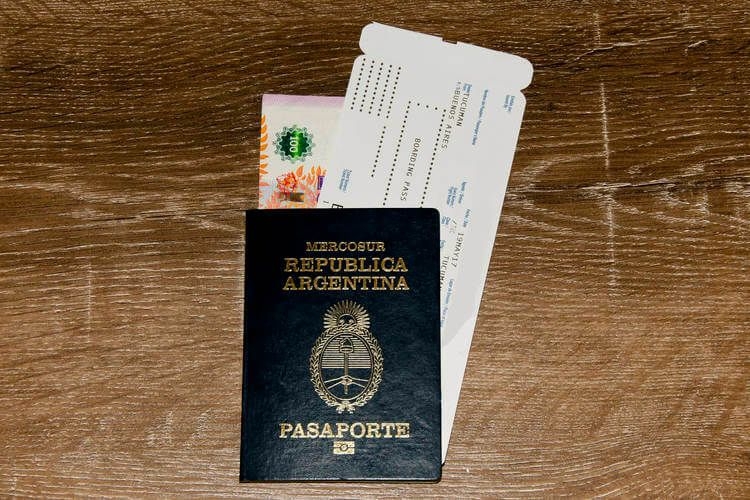
Vietnam E-Visa Requirements for Argentinean Citizens
The Vietnam visa for Argentinean citizens in 2026 is a 90-day e-visa. That's the headline. Single entry or multiple entry — the choice is yours at the time of application, and for travelers planning to cross into Cambodia or Laos and return to Vietnam (common on a broader Southeast Asia route), multiple entry is the smarter pick.
Here's what you need to have ready before starting the application:
- Valid Argentine passport — minimum 6 months of validity beyond your intended entry date into Vietnam; without this the portal will reject you
- Passport-quality digital photo — plain white or light background, full face, no glasses, taken recently
- Scanned passport bio-data page — high-resolution, flat, all four corners visible, no shadows or glare; blurry scans are a top rejection trigger
- Planned entry and exit points in Vietnam — your intended international airport or border crossing and approximate dates
- Valid email address — this is where your approved e-visa PDF will be sent
Processing under the standard service takes three business days. Urgent processing brings it to one business day. Emergency processing — for travelers already at the airport — takes two to four hours through priority channels. More on that shortly.
Cost: government e-visa fees apply at the time of application. Third-party services like VisaOnlineVietnam charge an additional service fee in exchange for application review, error-checking, and human support — genuinely useful given how often minor formatting slips cause rejections.
Denied Boarding at EZE: What Happens When Your Visa Isn't Ready
It's 6:15 AM at Ministro Pistarini International Airport (EZE) — Ezeiza — 22 kilometers outside Buenos Aires. You've already done the grueling Uber ride from the city at 4 AM. Your checked bag is on the belt. The Aerolíneas Argentinas agent at the desk scans your passport, looks at the screen, types something, looks again.
"Lo siento, señor — we can't confirm a valid entry document for Vietnam. You'll need to step aside."
Your flight departs in two hours and fifty minutes.
This scenario — and I've seen it play out more times than I care to count in 23 years — almost always traces back to one of three things: the traveler applied too close to departure and the standard three-day processing window hadn't closed; a rejection notice went to spam and was never seen; or, most commonly among Argentine applicants, a name was entered on the e-visa application that didn't match the machine-readable zone of the passport — because the portal stripped an accent, or the traveler typed their compound surname in the wrong order.
All of these are fixable. Not at the check-in desk, not by talking to the airline, but fixable. The Super Urgent Visa Service — emergency e-visa clearance processed through priority government channels — delivers a new approved e-visa within 2 to 4 hours. One phone call. The team handles the rest. Travelers catch their flights.
💡 Expert Insight from Stanley Ho: "Over my 23+ years handling travel logistics and Vietnam visa services, the most frequent disruption occurs at the check-in desk due to simple application formatting errors. If you are stuck at the airport and denied boarding, don't panic—our emergency team can secure a new E-visa clearance through priority channels within hours, saving your flight."
The Argentine Passport Trap: Name Formatting Errors That Kill Applications
This is the section that matters most for Argentinean travelers. Read it carefully.
Argentine names follow Spanish naming conventions, and Spanish naming conventions are, frankly, a system built for a world where computers didn't exist and nobody had to fit their identity into a 30-character ASCII field. There are three specific issues that cause problems on the Vietnam e-visa portal.
The ñ problem. The letter ñ — as in Muñoz, Peña, or Núñez — does not exist in the ASCII character set. The Vietnam e-visa portal, like most international immigration systems, runs on ASCII. It does not speak Spanish. When you enter a name with ñ, one of two things happens: the system strips it silently and reads it as n, or it throws a character error and rejects the field. Your safe move in every case: replace ñ with n when entering your name on the application. Muñoz becomes MUNOZ. Peña becomes PENA. Then cross-reference with the machine-readable zone — the two lines of printed text at the bottom of your passport's bio-data page — and confirm that's exactly how your name appears there. It should be. That's what gets scanned at immigration checkpoints, and your e-visa must match it.
The accent mark problem. Argentine passports, issued by the Registro Nacional de las Personas (ReNaPer), follow the standard that accent marks (á, é, í, ó, ú) are stripped in the machine-readable zone even if they appear in the visual name field. So your name might read "María José González" on the visual page of the passport while the machine-readable zone reads MARIA JOSE GONZALEZ. Enter your name as it appears in the machine-readable zone — no accents, no tildes. Full stop.
The compound surname problem. Argentine names typically consist of a forename, optional middle name, and a single legal surname — though double-barrelled surnames (paternal followed by maternal) exist, particularly for children of single mothers who later had the father's name added. Some older passports issued before 2011 may also show a married woman's name as her maiden surname followed by "de" and her husband's surname. This "de" construction is not her legal name under Argentine law, and should not be entered on the visa application. Use her maiden surname only, exactly as shown in the machine-readable zone.
The bottom line: before filling out your Vietnam e-visa application, open your Argentine passport to the bio-data page and look at the machine-readable zone. Copy those characters exactly — no accents, no ñ, no "de" constructions. That's your name for the purposes of this application.
VIP Fast-Track & E-Gate Services at Vietnam Airports
Getting in is the other half of the equation.
Most Argentinean travelers flying to Vietnam arrive at Tan Son Nhat International Airport (SGN) in Ho Chi Minh City — the most common entry point for travelers connecting through the Middle East or East Asia. Others head straight to Noi Bai (HAN) in Hanoi, or Da Nang (DAD) for central Vietnam. Cam Ranh (CXR) near Nha Trang and Phu Quoc (PQC) are also options for beach-focused itineraries.
Every one of these airports can have brutal immigration queues. Tan Son Nhat in particular during peak season — June through August, which maps exactly to when Argentine travelers are on winter holidays — can push standard processing times well past an hour. After 25+ hours of travel from Buenos Aires, including at least one connection, the last thing you want is another hour standing in a line that doesn't move.
The VIP Fast-Track service changes that equation entirely. A dedicated representative meets you at the gate or aircraft door, walks you through a priority immigration lane, and gets you to baggage claim before most passengers have shuffled fifty meters from the aircraft. For the long-haul traveler, this is sanity preservation, not extravagance.
E-gate options are also available at SGN, HAN, and DAD for eligible passport holders with a confirmed e-visa. Verify current eligibility for Argentine passport holders at the time of travel.
How to Apply for Your Vietnam E-Visa in 2026
The application is straightforward. The errors happen when people rush it.
Step 1: Access the portal. Use the official Vietnam Immigration Department portal or a trusted service like VisaOnlineVietnam. Third-party services add a review layer that catches name-formatting errors before they become rejections.
Step 2: Enter your personal details. Before typing anything, open your passport to the machine-readable zone. Copy your name from there — no accents, no ñ, no special characters. Your entry must match that zone exactly.
Step 3: Upload your photo and passport scan. Photo: white background, face forward, no glasses, no heavy shadows, recent. Passport scan: all four corners visible, no blur, no glare over the printed text.
Step 4: Select entry and exit points. Choose from Vietnam's 13 international airports, 16 land borders, and 13 seaports. SGN, HAN, DAD, CXR, and PQC cover virtually every Argentinean traveler's itinerary.
Step 5: Pay and submit. You receive an email confirmation immediately. Save it.
Step 6: Receive your approved e-visa. Standard: three business days. Urgent: one business day. Super urgent (airport emergency): 2 to 4 hours.
Step 7: Travel with it. Print a copy or keep the PDF on your phone. Vietnam immigration accepts both. Bring the printout as a backup — phones die, battery anxiety is real on a 25-hour journey.
Frequently Asked Questions
Can Argentinean citizens get a visa on arrival in Vietnam in 2026?
No. The Visa on Arrival approval letter system — where you paid an agent for a letter that let you collect a stamp at the airport — is completely obsolete in 2026 and is no longer a valid entry method. Do not pay anyone for a VOA approval letter. The Vietnam e-visa applied for before travel is the only standard tourist visa pathway for Argentinean citizens this year.
How long is the Vietnam e-visa valid for Argentinean passport holders?
The 2026 Vietnam e-visa is valid for 90 days from the date of issue. You can choose single entry or multiple entry. The maximum stay per entry is also 90 days. For travelers doing a multi-country Southeast Asia trip — Argentina to Vietnam, then Cambodia, then back to Vietnam — multiple entry is the right choice.
My Argentine passport name has an ñ or accent marks. What do I enter on the application?
Look at the machine-readable zone at the bottom of your passport bio-data page — those two lines of print. Your name there will already be in ASCII format: ñ stripped to n, accents removed, everything in uppercase Latin characters. Copy that version exactly into your e-visa application. Do not enter the accented version shown in the visual name field above. The immigration system scans the machine-readable zone, and your e-visa must match it.
Can I extend my Vietnam e-visa once I'm in the country?
Extensions can be applied for through the Vietnam Immigration Department while in-country, though approval is not guaranteed and the process is time-consuming. For most Argentinean travelers, 90 days is more than sufficient. Those needing longer typically find a brief border exit and re-entry — into Cambodia at Moc Bai, for example — more practical than an in-country extension application.
Is the Vietnam e-visa accepted at all entry points?
It's accepted at 13 international airports, 16 international land borders, and 13 seaports. SGN (Ho Chi Minh City), HAN (Hanoi), DAD (Da Nang), PQC (Phu Quoc), and CXR (Cam Ranh / Nha Trang) are the airports most relevant to Argentinean travelers. If you plan to enter by land from Cambodia or Laos — both popular on a longer Southeast Asia circuit — confirm your specific border crossing is on the approved list before departing for it.

STANLEY HO
Over the past 23 years in the travel service industry, the growth and success of TRANSOCEAN have stemmed not only from the dedication of our well-trained, enthusiastic, and customer-oriented staff, but also from the exceptional leadership of our Founder and CEO, Mr. STANLEY HO. With more than 20 years of experience in the travel and tourism sector, Mr. STANLEY HO possesses profound knowledge of the market, customer behavior, and modern travel trends. His strategic vision has guided the company toward sustainable growth while maintaining a strong commitment to service quality.